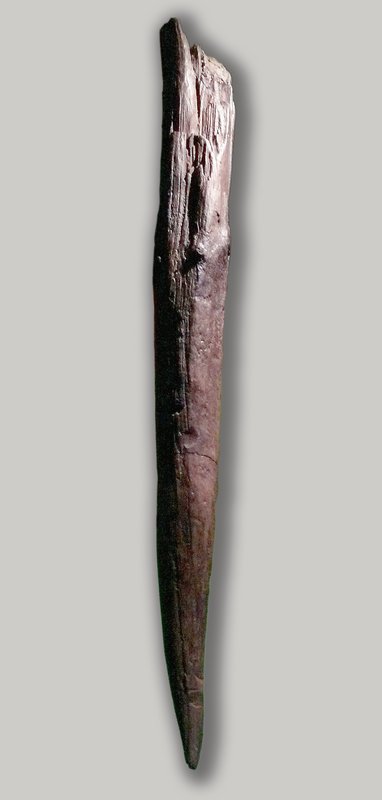
In the Megalopolis basin at the heart of the Greek Peloponnese, the Marathousa 1Marathousa 1Open-air Palaeolithic site in the Megalopolis basin, Greece, on the shore of an ancient lake, where the oldest handheld wooden tools were found.→ archaeological site has been yielding exceptional Middle PleistoceneMiddle PleistoceneGeological subperiod (about 770,000 to 126,000 years ago) marked by growing behavioural complexity among hominins.→ remains for several years. A new study published in PNAS announces the discovery of the oldest portable wooden tools ever found anywhere in the world: a set of fragments dated to around 430,000 years ago, fashioned and used by hominins most likely belonging to Homo heidelbergensisHomo heidelbergensisMiddle Pleistocene human species, often seen as the common ancestor of Neanderthals and our own species.→.
Tools, not spears
The distinction is essential: the Marathousa 1 tools are not throwing weapons like the famous SchöningenSchöningenGerman site that yielded eight wooden throwing spears about 300,000 years old, among the oldest known wooden weapons.→ spears (Germany), dated to around 300,000 years ago, nor are they points like the Clacton Spear (around 400,000 years). They are portable implements -- probably digging sticks, handles or multi-purpose tools -- whose shape and use-wearuse-wearMicro-traces left on a tool by its use, studied through use-wear analysis to reconstruct its function.→ traces suggest utilisation for digging, extracting tubers or processing prey.
The fragments, though fragmentary due to their age, preserve undeniable traces of intentional shaping: regularly scraped surfaces, uniformly blunted ends, and in one case a fusiform shape suggestive of a handle. The research team also identified traces of charring on one fragment, which may indicate hardening of the wood by fire exposure -- a technique documented among historical and prehistoric hunter-gatherer populations.
Wood: the great absentee from the fossil record
The rarity of wooden tools in the archaeological record is deceptive: it reflects preservation conditions far more than actual frequency of use. Wood degrades rapidly, except in particularly favourable environments -- peatPeatA waterlogged organic soil formed by accumulated plants; it seals and remarkably preserves wood and ancient remains.→ bogs, anoxic lake sediments, very dry conditions. The Megalopolis basin, formerly occupied by a shallow lake with anoxic waters, provided an exceptional context for organic matter preservation.
This taphonomic reality means our view of the Middle PalaeolithicMiddle PalaeolithicA Palaeolithic period (c. 300,000 to 40,000 years ago) associated mainly with Neanderthals and early Homo sapiens, marked by Levallois tools.→ is strongly biased towards durable materials: stone, bone and ivory. Middle Palaeolithic lithic industries -- late AcheuleanAcheuleanLower Palaeolithic technical culture characterised by hand axes, present across three continents.→, Clactonian, early MousterianMousterianThe stone-tool industry typical of Neanderthals, based on the Levallois flaking technique.→ -- are abundantly documented. But the hominins who made them also worked wood, plant fibres and probably other organic materials that have vanished without trace. Marathousa 1 reminds us of the extent of what we are missing.
Who made these tools?
The Marathousa 1 site is associated with a Middle Pleistocene fauna including hippopotamuses, archaicArchaicRefers to an ancient, now-extinct human population or form (Neanderthals, Denisovans, ghost lineages), as opposed to anatomically modern humans.→ elephants (Palaeoloxodon antiquus) and large felids. The hominins who frequented this lake 430,000 years ago most likely belong to Homo heidelbergensis, or to a related population not yet formally identified. Faunal fragments bearing cut marks attest to butchery activity on the spot.
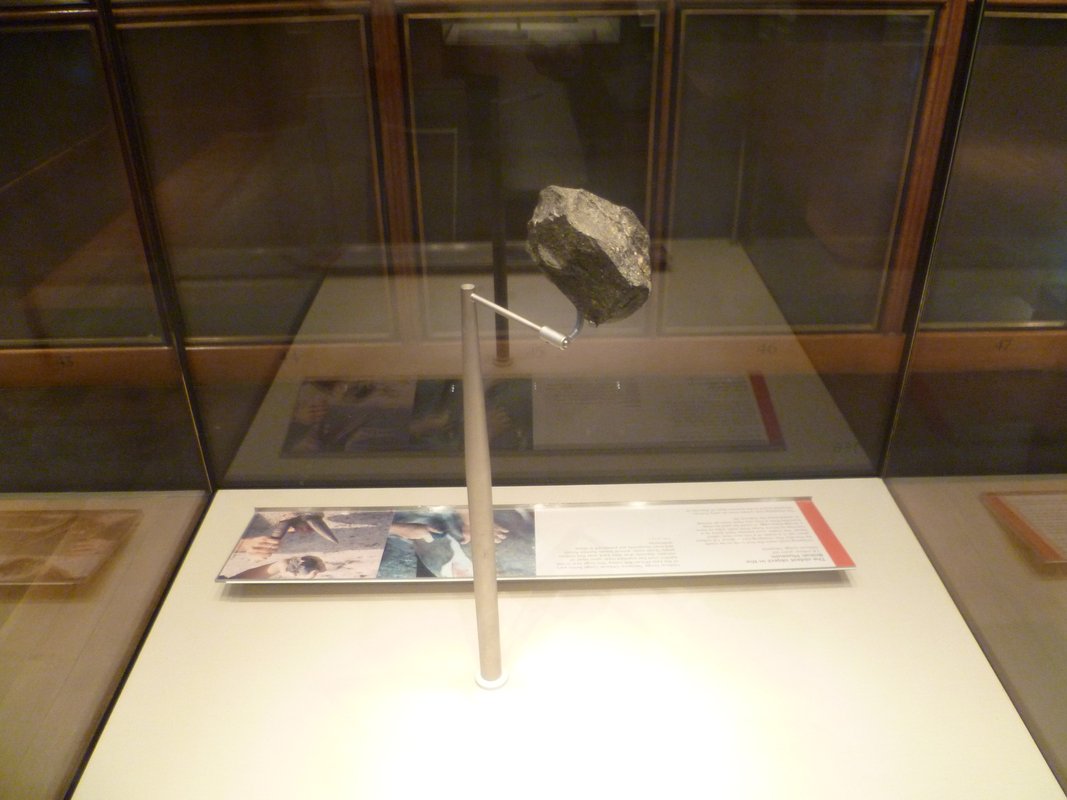
The ability to make and use portable wooden tools implies considerable cognitive planning: choosing the right wood species, felling or trimming the tree, transporting the logs, shaping them with stone tools. The scraping traces observed at Marathousa 1 correspond precisely to marks left by a flintFlintA hard, brittle siliceous rock, knapped by prehistoric people to produce blades, points and sharp tools.→ tool drawn perpendicularly across the wood surface. These hominins therefore possessed an operational chain integrating both stone- and wood-working -- a technological sophistication previously underestimated for this remote period.
A recalibration of our knowledge
The study's authors stress the need to reconsider the chronology of technological innovations in the PalaeolithicPalaeolithicThe oldest and longest period of prehistory (c. 3.3 Ma–12,000 BC), defined by chipped stone tools and a hunter-gatherer way of life.→. If portable wooden tools existed 430,000 years ago in Greece, they very likely existed far earlier -- and elsewhere. The site's geographical distribution also recalls that southern Europe and the eastern Mediterranean played a major role in the evolutionary history of European hominins, often overshadowed by spectacular discoveries in Spain (AtapuercaAtapuercaA complex of archaeological sites in the Sierra de Atapuerca (Burgos, Spain), a UNESCO site, yielding an exceptional sequence of human fossils, including the Sima de los Huesos and Homo antecessor.→) or France (Tautavel).
Future excavation campaigns at Marathousa 1 will focus on the spatial extent of the deposit and the search for further organic fragments. The team also hopes to extract environmental DNAEnvironmental DNADNA shed by organisms into their surroundings (soil, sediment, water, rock wall) and recoverable without any identifiable bodily remains.→ or preserved proteins from the sediments, in order to better characterise the flora and fauna of this ancient lake -- and perhaps obtain genetic information on the hominins themselves.
No comments yet. Be the first.