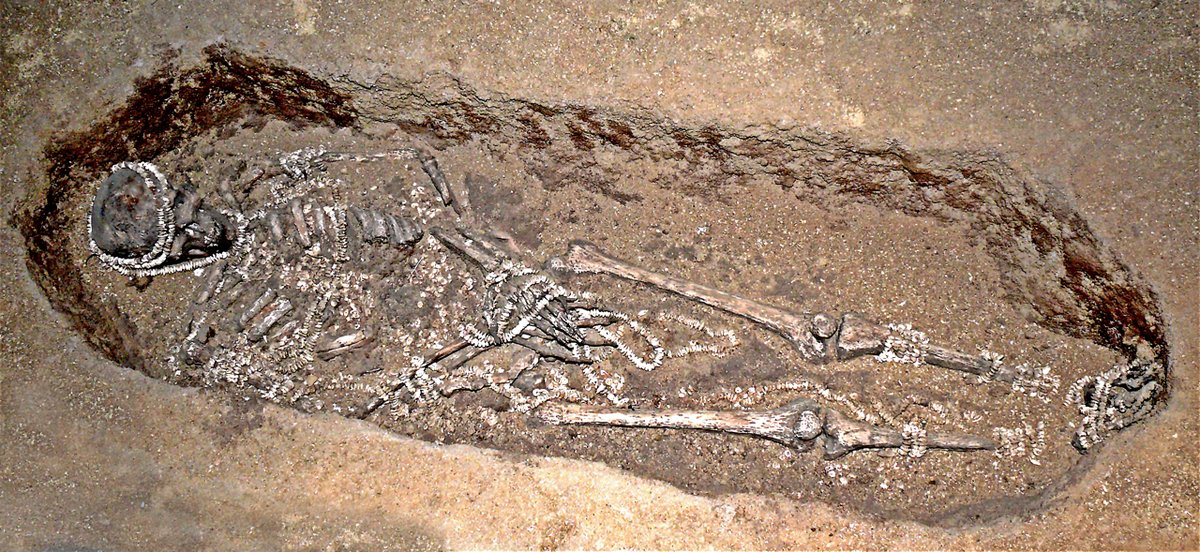
On 28 March 1872, at the Franco-Italian border, archaeologist Emile Riviere unearthed a human skeleton in the Cavillon cave near Menton. Now dated to around 24,000 years ago, this fossil would profoundly reshape our understanding of prehistoryPrehistoryThe span of human history before the invention of writing, from the Palaeolithic to the Metal Ages, known mainly through material remains.→. The individual now known as the Dame du Cavillon was initially taken for a man, owing to the robustness of the bones and the extraordinary richness of the funerary goods: a headdress made of perforated shells and pierced deer canines arranged around the skull. Her scientific history is also the story of a slowly changing gaze, decade after decade, on the societies of the Late PalaeolithicPalaeolithicThe oldest and longest period of prehistory (c. 3.3 Ma–12,000 BC), defined by chipped stone tools and a hunter-gatherer way of life.→.
This documentary by Pauline Coste (ARTE, 2021, 53 minutes) traces this inquiry across several European sites, from the GravettianGravettianAn Upper Palaeolithic culture (c. 33,000–21,000 BC) spanning from the Atlantic to Siberia, famous for its ivory female figurines ("Venuses") and, at Dolní Věstonice, the oldest fired ceramics.→ layers of the Cavillon cave to the remarkable burials of Dolni Vestonice in the Czech Republic, Sungir in Russia, and the Cussac cave in the Dordogne. It reveals previously unpublished footage of Cussac, an exceptional site that uniquely combines cave art and human bones -- a combination unparalleled in the archaeological record.
Burials that challenge received wisdom
Mostly dated to the Gravettian period (between 34,000 and 24,000 BC), the burials examined in this documentary underline how complex the mentalities of Upper PalaeolithicUpper PalaeolithicThe final phase of the Palaeolithic (c. 45,000 to 10,000 years ago), marked by Homo sapiens in Europe, art, ornaments and a succession of cultures (Aurignacian, Gravettian, Solutrean, Magdalenian).→ hunter-gatherersHunter-gatherersA way of life based on hunting, fishing and gathering wild resources, without farming or herding; it dominated almost the whole of human history.→ truly were. Far from the image of primitive beings, they buried their dead with meticulous care and a remarkable sense of ornamentation. The Dame du Cavillon, crowned with more than 220 perforated shells and pierced teeth, is the most striking example.
Who were these individuals interred with such pomp? Shamans, clan leaders, sacrificial victims, or simply people with a pronounced taste for personal adornment? The documentary brings together the interpretations of archaeologists, anthropologists and prehistorians to tackle these questions. The study of the ornaments themselves -- their composition, their arrangement on the skull, the species of shells identified -- yields precious information about the symbolic practices and exchange networks of these populations.
Dolni Vestonice and Sungir: two Gravettian landmarks
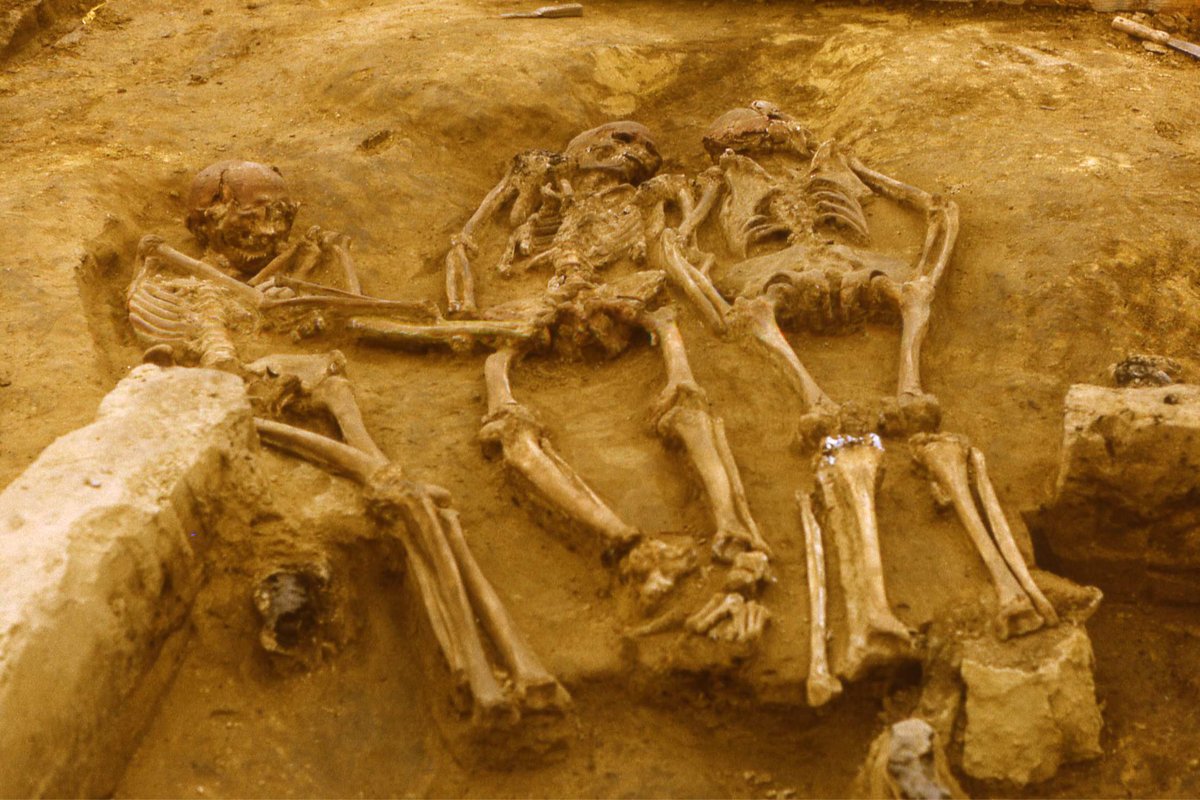
The site of Dolni Vestonice in Moravia (Czech Republic) offers another perspective on Gravettian funerary practices. Its famous "triple burial" -- three individuals interred side by side, their positions suggesting a deliberate staging -- has fascinated researchers since its discovery. Recent DNADNAThe molecule carrying genetic information, used to reconstruct kinship between species.→ analyses revealed that two of the individuals were related males, while the third, placed in the centre, was a woman. This unusual configuration highlights the complexity of the rituals and the diversity of beliefs among Gravettian populations.
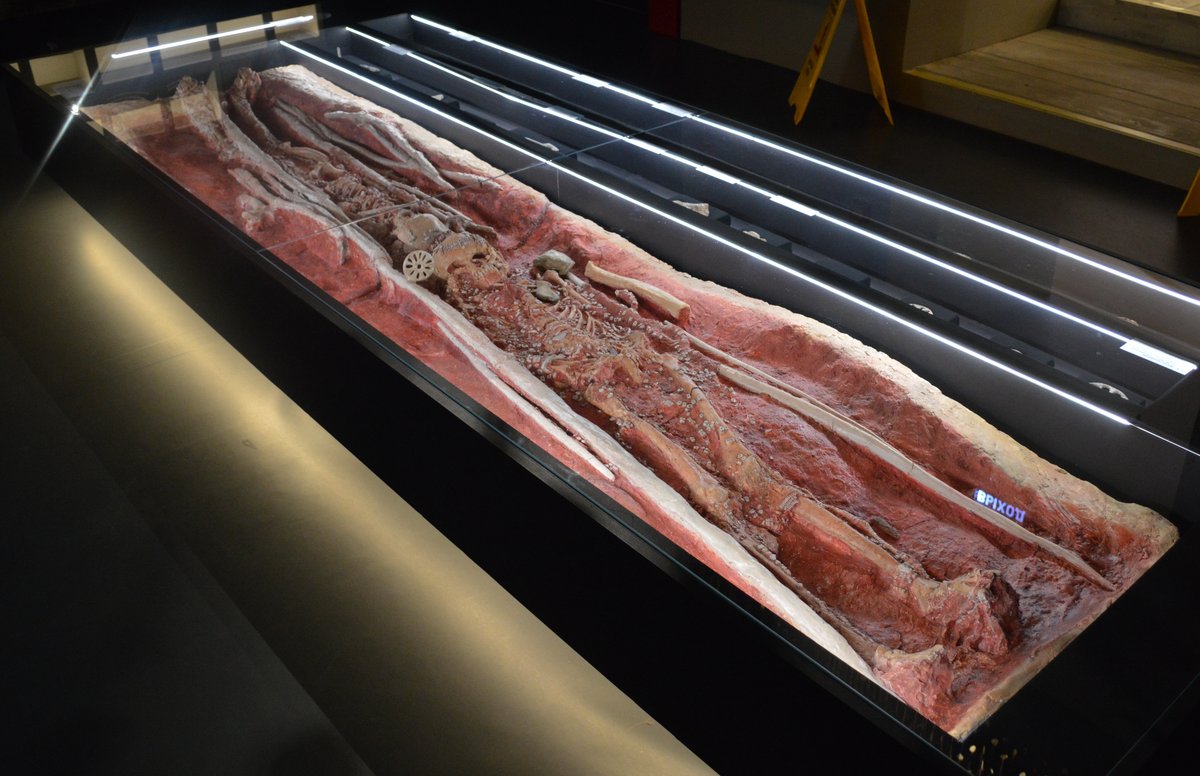
At Sungir in Russia (around 34,000 BC), the burials of an adult man and two adolescents yielded funerary goods of unparalleled richness: thousands of mammoth-ivory beads sewn onto garments, heat-straightened ivory spears, bracelets and pendants. These objects, which required thousands of hours of work, indicate an exceptional social status and elaborate beliefs in an afterlife.
Cussac: the cave with two mysteries
The Cussac cave in the Dordogne represents a unique case in known prehistory: it houses both an exceptional ensemble of engraved cave art (mammoths, rhinoceroses, bison, stylised humans) and human skeletal remains dated to around 25,000 years ago. This association of art and death in the same underground space raises profound questions about the meaning of these sanctuaries for Upper Palaeolithic populations. The documentary reveals previously unseen footage of the site, offering a rare glimpse into this UNESCO World Heritage-listed cave.
The discovery of the Dame du Cavillon in 1872 was only the starting point for a long revision of our representations of prehistory. Through these exceptional burials, the ARTE documentary invites us to contemplate societies whose spiritual and symbolic richness equals or even exceeds what we had imagined. These men and women of the Late Palaeolithic were not merely hunters: they were also artists, ritualists and thinkers whose traces have endured for 30,000 years beneath our feet.
Documentary by Pauline Coste. Production ARTE France, 2021. Available for replay on arte.tv until 13 October 2026.
No comments yet. Be the first.