Stonehenge has stood on Salisbury Plain in Wiltshire for more than five thousand years. Yet despite decades of excavations, isotopic analyses, radiocarbon dating, and now genomic sequencingSequencingReading the order of the bases (A, T, G, C) of a DNA molecule; high-throughput sequencing reads millions of fragments in parallel.→, the monument continues to defy any definitive interpretation. This is not for want of hypotheses: every generation of researchers proposes new ones, often as convincing as they are contradictory. This dossier does not attempt to summarise what is already known about Stonehenge -- a separate article covers the basics -- but rather to explore what science has yet to determine, what recent excavations have overturned, and the debates that currently divide the most informed specialists.
Discoveries made in the 2020s have profoundly renewed our understanding of the site. A giant circle of NeolithicNeolithicThe "New Stone Age": a period marked by farming, herding, settlement and pottery, from around 10,000 BC.→ pits identified in 2020 approximately two and a half kilometres from the monument, genomic revelations about the origin of the populations who built the site's earliest phases, the theory of a dismantled proto-Stonehenge in Wales reassembled in Wiltshire: all of these elements transform our reading of an edifice once thought to stand alone in an empty landscape. Far from being an isolated monument, Stonehenge now appears as the hub of a ritual, funerary, and perhaps therapeutic network of dizzying complexity. Yesterday's certainties give way to even more ambitious questions.
Who Were the Builders? Revelations from Ancient DNAAncient DNAGenetic material preserved in old remains, often degraded, sequenced with cutting-edge techniques.→
For a long time, the question of the identity of Stonehenge's builders remained suspended between hypothesis and speculation. Traditional archaeology could date bones found in the pits, identify funerary practices, and establish construction sequences, but it could not say who, in any biological or migratory sense, had raised these stones. Since the revolution of ancient DNA in the 2010s and 2020s, this void has begun to be filled -- though not without raising equally disconcerting new questions.
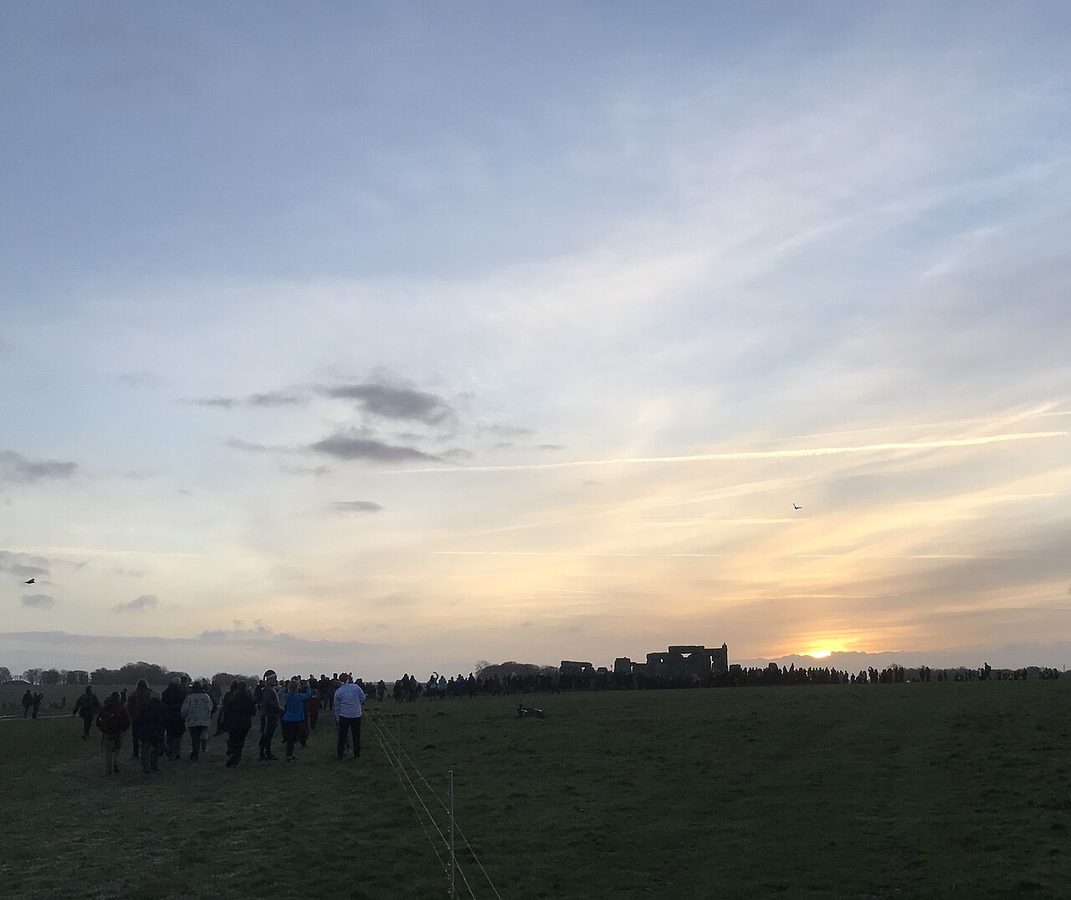
A study published in 2019 in the journal Nature Ecology and Evolution, conducted by an international team including the laboratories of David Reich at Harvard and Johannes Krause in Jena, analysed the DNADNAThe molecule carrying genetic information, used to reconstruct kinship between species.→ of more than 50 individuals buried in Neolithic Britain.1 The results are striking: the populations who built the earliest phases of Stonehenge, from approximately 3100 to 2500 BCE, descended from migrants who came from Anatolia and southeastern Europe, arriving in Britain around 4000 BCE. These farming populations largely replaced the indigenous hunter-gatherersHunter-gatherersA way of life based on hunting, fishing and gathering wild resources, without farming or herding; it dominated almost the whole of human history.→, heirs of the MesolithicMesolithicThe period between the Palaeolithic and the Neolithic (c. 10,000–6,000 BC in Europe), still based on hunting and gathering.→, within just a few generations. A near-total demographic replacement, documented with this level of precision for the first time.
This result is remarkable in itself, but it does not resolve everything. We now know that the carriers of the Bell Beaker culture, arriving in Britain around 2450 BCE from continental Europe, in turn replaced or absorbed the majority of this Neolithic population. This means that the later phases of Stonehenge -- notably the erection of the great sarsenSarsenA block of very hard silicified sandstone, the remnant of a Cenozoic sedimentary cover scattered across the chalk of southern England. The largest Stonehenge stones are sarsens from West Woods, in Wiltshire.→ trilithons -- may have been carried out by populations of different genetic origin from the original builders. Cultural continuity without genetic continuity: this is one of the great enigmas that ancient DNA poses regarding Stonehenge. The spiritual heirs of the original builders may not have been their biological descendants at all.2
More recent work published between 2021 and 2023 refined this picture by analysing individuals specifically associated with the site's structures. Among the bones found in the circular ditch and in the Aubrey holes, some belong to individuals whose isotopic analysis indicates a distant geographical origin, sometimes beyond the current borders of Wales or Scotland. Stonehenge was therefore attracting visitors, pilgrims, or perhaps specialist workers from across the British territory from its earliest phases. But were these permanent migrants or seasonal travellers who came for the great collective gatherings? The question remains entirely open and may never be definitively resolved.3
One of the most troubling aspects of this genomic research concerns the internal diversity of the populations buried at Stonehenge and its immediate surroundings. Individuals presenting genetic profiles compatible with partly continental ancestry have been found in funerary contexts associated with the monument's earliest phases, suggesting that Stonehenge exercised an attraction capable of crossing geographical and cultural boundaries well before the arrival of Bell Beaker populations. Some researchers see in this the sign of a prestige radiating across all of the British Isles, and perhaps even beyond, from the very beginnings of the monument's construction and use.
We must finally acknowledge what DNA cannot reveal: the language of these populations, their beliefs, their social organisation, their name for the monument they were constructing. Genomic archaeology provides a map of human movements, not access to consciousness or immaterial culture. For archaeologists working on Stonehenge, ancient DNA is a powerful but radically incomplete tool. The deepest questions -- why here? why these stones? why this precise orientation? -- remain entirely intact, and may be permanently beyond the reach of any scientific method currently available.
The Bluestone Mystery: A Dismantled Monument in Wales?
The bluestones of Stonehenge have always constituted one of its greatest mysteries. These approximately 80 monoliths of dolerite, rhyolite, and other volcanic or metamorphic rocks come from the Preseli Hills in Pembrokeshire, Wales, approximately 250 kilometres to the northwest of Salisbury Plain. The question of their transport has occupied archaeologists for more than a century: overland or by sea? By human effort alone or assisted by sledges and rafts? But since 2021, an even more radical hypothesis has taken hold in the scientific debate, fundamentally changing the nature of the question being asked.
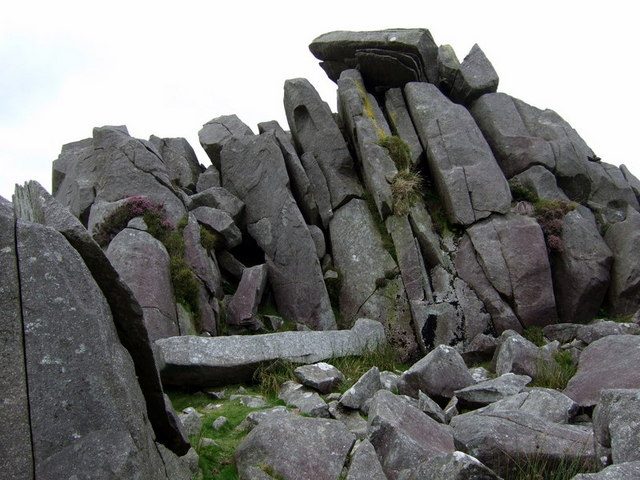
Mike Parker Pearson, professor at University College London and one of the leading specialists on Stonehenge, led excavations in the Preseli Hills that produced a spectacular discovery: at Waun Mawn in northern Pembrokeshire, archaeologists uncovered the remains of a dismantled stone circleStone circleA Neolithic or Bronze Age monument of standing stones set in a ring, often ritual or astronomical in purpose.→ whose several characteristics correspond precisely to the bluestones of Stonehenge.4 The orientation of this circle, dated to approximately 3400 to 3000 BCE, corresponded to the solstitial axis. Its size, approximately 110 metres in diameter, would have made it one of the largest stone circles known in the British Isles at that time. And its empty stone holes are consistent with the dimensions of several Stonehenge bluestones.
According to Parker Pearson's hypothesis, Stonehenge would not simply be a monument built with stones from Wales: it would actually be the dismantlement and reuse of a pre-existing Welsh monument. Its builders would have transported not merely raw materials but the actual stones of a prior sacred place, transferring with them the symbolic or spiritual charge attached to that site of origin. This hypothesis transforms Stonehenge into something radically different: not a creation from nothing, but an act of monumental memory, a form of translating the sacred across the landscape. The stones would have arrived already loaded with a pre-existing history and power.
Not all archaeologists share this enthusiasm, however. Some researchers have pointed out that direct evidence of a correspondence between the stone holes left at Waun Mawn and the Stonehenge bluestones remains fragmentary. The dating, although compatible with the theory, does not imply a direct filiation. Others have noted that the practice of dismantling monuments to build new ones elsewhere is attested in Neolithic Britain, without necessarily implying a transfer of meaning or sacrality. The debate therefore remains very open within the scientific community, and excavations at Waun Mawn are continuing.
Another dimension of the bluestone mystery concerns the tooling marks that some of them bear, dating from before their erection at Stonehenge. Tenons, sockets, regularly polished surfaces: all evidence that these stones had already been shaped and perhaps raised elsewhere before being transported and re-erected on Salisbury Plain. This discovery reinforces the idea that the bluestones were not raw materials chosen simply for their geographical availability, but objects already charged with a prior history. They carried with them, in their very body of stone, the memory of another place and perhaps another use.
As for the transport mechanism itself, experimental reconstructions have shown that it was technically feasible using sledges, ropes, and substantial human teams, whether via an entirely overland route or a combined overland and coastal maritime route around Wales and the Bristol Channel. But "feasible" is not "proven." No intermediate archaeological object, no trace of a road or track, has been formally identified between the Preseli Hills and Stonehenge to confirm either route. The most impressive logistics operation of British prehistory remains, for the most part, an absolute unknown.
Solar Observatory or Lunar Tracker? The Great Astronomical Debate
Stonehenge's alignment with the sunrise at the summer solstice has been known since the eighteenth century, and the modern druids who gather there every year on 21 June have turned it into a global media event. But this apparent self-evidence masks a far more complex scientific debate: was Stonehenge primarily a solar marker, a lunar observatory, or both simultaneously? And what precise role did these alignments play in the ritual practices of its users across several centuries of intensive use?
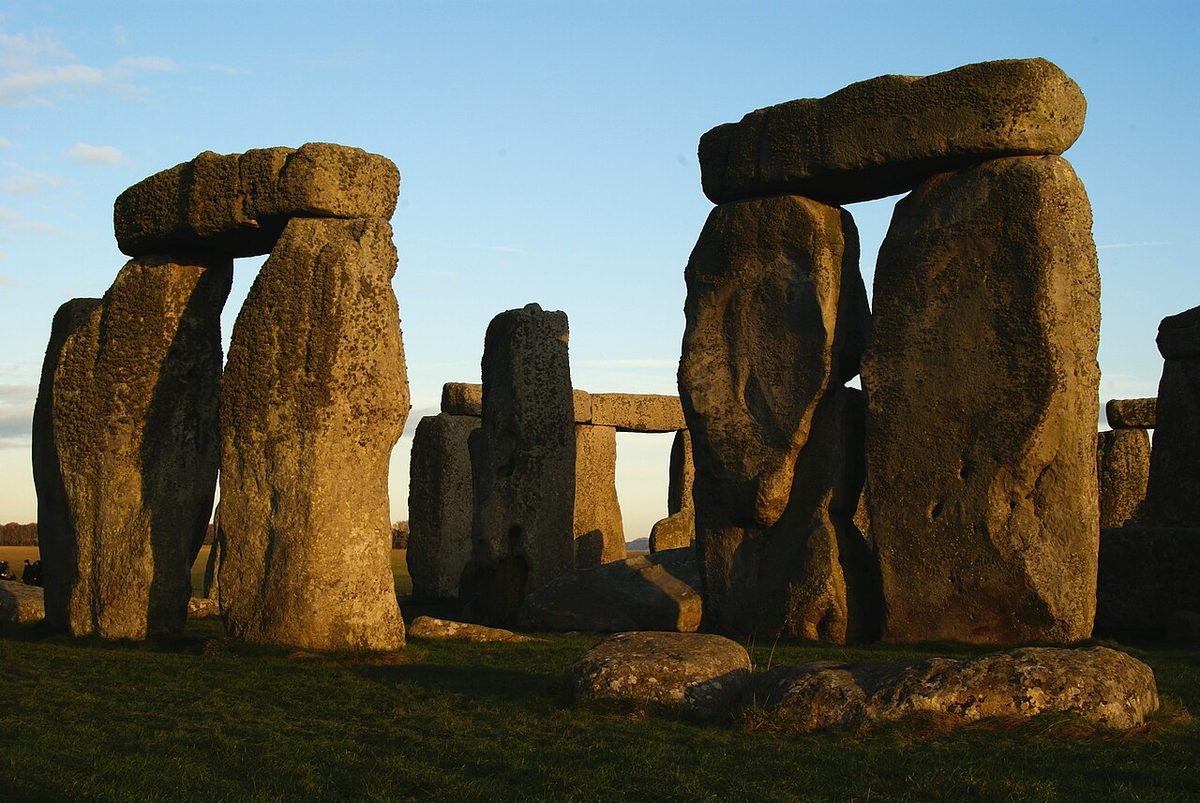
The best-known alignment is that of the monument's main axis with the sunrise at the summer solstice and, conversely, with the sunset at the winter solstice. Recent research has emphasised the importance of this second alignment, the winter solstice, which may have been the primary and most meaningful orientation of the monument. Mike Parker Pearson and others argue that Stonehenge was fundamentally a monument of the dead, associated with the wintry world and the setting sun, while Durrington Walls, the large timber circle complex located a few kilometres away, was the place of the living, oriented towards the summer sunrise.5 This cosmological duality of living/dead, summer/winter, wood/stone would constitute the symbolic heart of the entire ceremonial system.
Alongside this, research into the lunar alignments of Stonehenge has illuminated another possible dimension of the monument. Clive Ruggles, archaeoastronomer at the University of Leicester, documented correspondences between certain structures at the site and the extreme positions of the moon during major lunar standstills -- the periods when the moon reaches its most distant positions from the celestial equator, on a cycle of approximately 18.6 years. A study published in 2022 proposed that four of the five Station Stones of Stonehenge -- isolated monoliths arranged in a rectangle around the main circle -- were precisely aligned to observe these extreme lunar positions, suggesting a mastery of the lunar calendar long underestimated by researchers.
One of the most innovative hypotheses of recent years concerns the possibility that Stonehenge functioned as a precise solar calendar. In 2022, Timothy Darvill, professor at Bournemouth University, published a theory proposing that the arrangement of the 30 sarsen stones in the outer circle, combined with the 5 large inner trilithons and specific additional architectural elements, formed a counting system enabling the marking of months and days of a solar year of 365.25 days.6 If this hypothesis is correct, Stonehenge would be the oldest structured calendar known in Europe, predating Egyptian and Mesopotamian calendars by several centuries.
But this thesis also has its detractors among specialists. Several archaeoastronomers have pointed out that the precision required for such a calendar goes well beyond what the Neolithic builders of Stonehenge could reliably have achieved, and that numerical coincidences between architectural elements can be found in any complex structure if one searches long enough. The boundary between rigorous archaeoastronomy and numerical pareidolia is difficult to draw, and the debate between "Stonehenge as a precise calendar" and "Stonehenge as a general seasonal marker" is far from settled. The available data do not yet allow the two camps to be definitively separated.
What does represent a consensus, however, is that the alignments of Stonehenge were not accidental. The precision with which the monument's axis, the Avenue, and the positions of the stones correspond to important solar and lunar points far exceeds statistical chance. But technical precision says nothing about social or spiritual purpose: the same alignments could have served to mark the dates of great agricultural festivals, to regulate the funerary cycle according to precise cosmological logic, to maintain a sacred calendrical knowledge entrusted to a class of ritual specialists, or simply to awe visitors with an astonishing astronomical spectacle. Each of these interpretations is possible, and perhaps all were simultaneously at work.
A Healing Sanctuary: The Medical Hypothesis
One of the most surprising and most debated hypotheses in Stonehenge archaeology is that of the healing sanctuary. Initially proposed by Timothy Darvill and Geoffrey Wainwright on the basis of their 2008 excavations, it suggests that Stonehenge was perceived by Neolithic and early Bronze AgeBronze AgeA protohistoric period following the Neolithic, defined by bronze metallurgy (a copper-tin alloy) and the rise of the first cities and states; in Egypt it corresponds to the age of the first pyramids.→ populations as a place endowed with therapeutic powers, to which sick or injured individuals converged from across the British territory, hoping to find healing through contact with the stones or the rituals performed there.7 A prehistoric Lourdes, in a sense.
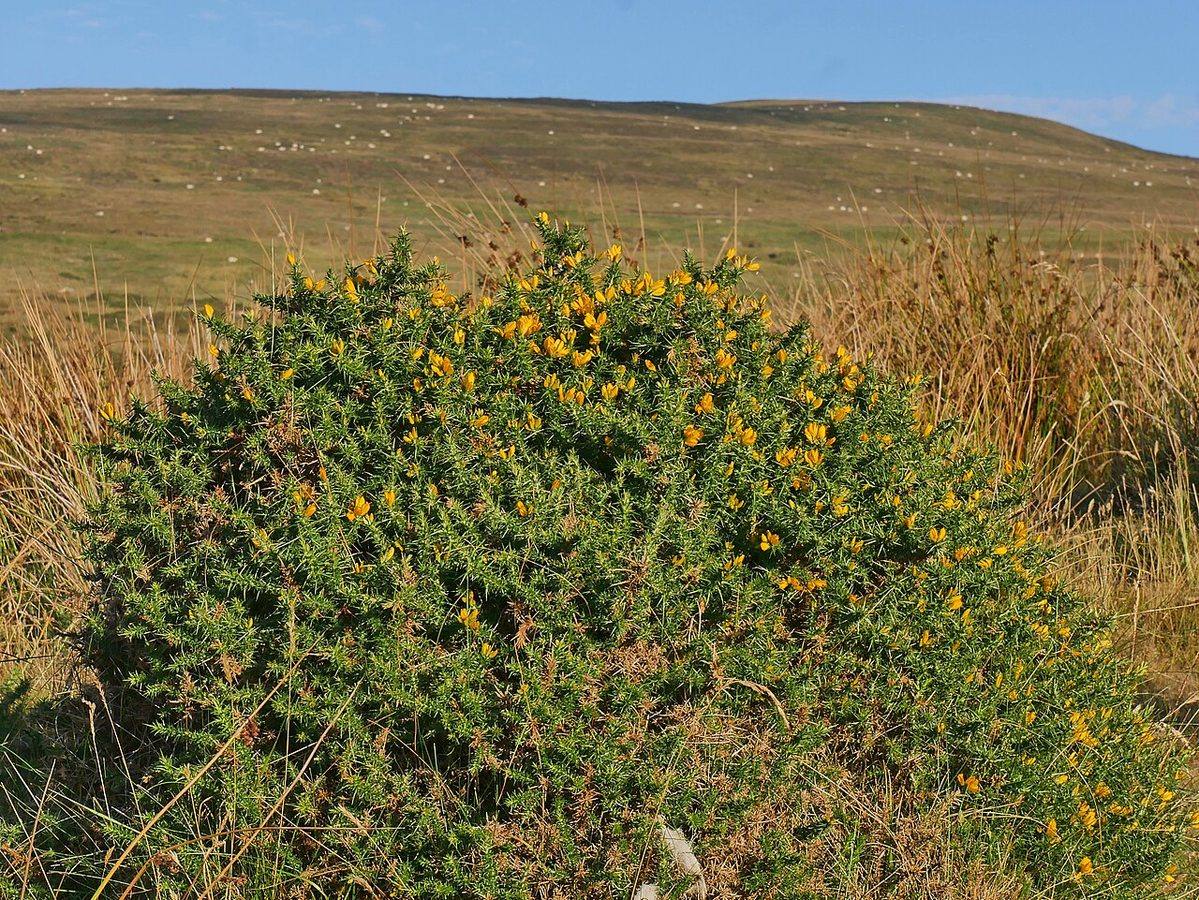
The evidence advanced by Darvill and Wainwright is of several kinds. First, analysis of human remains found in the Aubrey holes and in the circular ditch reveals an abnormally high proportion of individuals presenting serious pathologies: poorly consolidated fractures, congenital or acquired bone deformities, signs of chronic infections affecting bone tissue. This concentration of clearly diseased individuals is statistically greater than that observed in ordinary Neolithic cemeteries of the same region and period. This is not a "normal" population of contemporaneous dead.
Furthermore, isotopic analysis of these skeletons indicates that many of them came from regions distant from Salisbury Plain, sometimes by several hundred kilometres. Individuals whose strontium and oxygen isotopes betray a childhood spent in geologically distinct regions of Wiltshire -- Wales, northern England, and perhaps continental regions -- were buried at Stonehenge or in its immediate vicinity. These people had therefore undertaken a long journey to die, or to be buried, near the monument, strongly suggesting that the journey was motivated by a specific intention, very probably the search for healing.
Some archaeologists have pushed the hypothesis further still, connecting Stonehenge to a broader tradition of therapeutic pilgrimage attested at certain megalithic monuments in Europe. In Brittany, Ireland, and Iberia, stone circles or dolmens have been associated, in local traditions and sometimes in archaeological traces, with healing practices or contact with beneficial supernatural forces. Stonehenge would fit within this wider cultural landscape in which stone -- the permanently enduring material par excellence -- is invested with a power of mediation between the human world and an invisible world capable of intervening in the health of the living.
The healing sanctuary hypothesis is not universally accepted in academic circles, however. Other archaeologists object that the presence of sick individuals at a funerary site is not necessarily linked to therapeutic pilgrimage: ill people also die at home, and their relatives sometimes bury them in places considered important or sacred. The overrepresentation of pathological individuals might simply reflect the fact that the wealthiest families, able to fund inhumation in a site as prestigious as Stonehenge, were also those whose members sometimes died after costly long illnesses. The debate is far from closed.
The 2008 excavations also produced another intriguing piece of evidence: fragments of bluestones that had been deliberately broken, perhaps to extract chips intended to be carried away by visitors as relics or talismans. In other archaeological contexts, the practice of fragmenting sacred objects to distribute pieces bearing the same power is well documented across different cultures. If this is what was happening at Stonehenge, it reinforces the idea that the stones themselves, and not only the place or the rituals performed there, were invested with a particular and perhaps curative power that was actively sought well beyond the monument itself.
The Legend of Merlin and Stonehenge's Mythic Memory
In the twelfth century, Geoffrey of Monmouth, in his Historia Regum Britanniae, recounted that Stonehenge had been erected through the magical powers of Merlin, Arthur's enchanter, who had transported the stones from Ireland by the sheer force of his sorcery alone. This legend, long considered a mere medieval literary fantasy with no connection to archaeological reality, actually raises a serious scientific question: to what extent can oral traditions and myths preserve a memory, however radically distorted, of real prehistoric events?
The question is not as absurd as it might seem at first reading. Recent anthropological research has shown that certain oral traditions of indigenous peoples can preserve accurate traces of geological events dating back thousands of years, such as volcanic eruptions or sea-level rises linked to the end of the last glaciation. If oral traditions can cross 5,000 to 10,000 years with a degree of factual truth intact, why could a tradition concerning the transport of stones from a distant region not have survived, in a profoundly legendary form, until the Middle Ages?
Geoffrey of Monmouth locates the origin of the stones in Ireland, not in Wales. This is a manifest geographical error relative to archaeological reality. But the central idea -- that the stones came from a distant region and were transported by means of extraordinary power -- corresponds to a well-documented reality. Some researchers have speculated that the memory of transporting the bluestones from Wales could have survived for centuries in oral traditions, before being transformed and mythologised into a tale of magic at a time when the real mechanisms of transport were no longer comprehensible to medieval populations who encountered the monument.
Others have explored the striking parallels between the legend of Merlin and older Celtic traditions concerning stones endowed with healing powers. In Geoffrey's version, the stones had originally been brought to Ireland from AfricaAfricaThe cradle of humankind: the continent where the first hominins appeared, then Homo sapiens around 300,000 years ago, before the expansion to the rest of the world.→ by giants, and they possessed specific medicinal properties: water poured over them, collected and administered to the sick, was supposed to heal wounds and various diseases. This precise narrative detail overlaps in a striking way with the hypothesis advanced by Darvill and Wainwright regarding the healing sanctuary. A fortuitous coincidence or the trace of a very ancient cultural memory surviving within the medieval narrative?
Scientific caution demands that we avoid drawing overly hasty conclusions. The Merlin legend is a twelfth-century literary text, produced in a specific political context by an author whose objectives were largely political -- legitimising Anglo-Norman kingship -- as much as narrative. It would be naive to read it as a direct testimony of an unbroken Neolithic oral tradition. But it illustrates something important about the nature of Stonehenge: it is a place onto which people project their stories, their desires, and their representations of the past. The manufacture of the Stonehenge myth is itself an object of study for cultural history and collective memory.
The Invisible People: Where Did the Builders Live?
For a long time, one of Stonehenge's great practical mysteries was the apparent absence of any settlement near the monument. Archaeologists found an abundance of dead, ritual objects, and feasting remains, but almost nothing resembling a village or an organised community set up to live and work around the construction site. Where did the thousands of people who participated in the building and use of the site over several centuries actually live? This question received a partial but spectacular answer with the discovery of Durrington Walls.
Durrington Walls is a large Neolithic enclosure whose circular ditch measures approximately 500 metres in diameter and whose interior revealed, through systematic excavations in the 2000s and 2010s, the remains of several thousand timber houses built at the same time as the major construction phases of Stonehenge. Archaeobotanical and archaeozoological analyses have shown that this settlement was the scene of monumental feasting: thousands of pig, cattle, and other animal bones, often slaughtered at precise ages corresponding to determined seasonal periods, testify to large-scale periodic gatherings.8
Parker Pearson proposed a dual interpretation of the Stonehenge-Durrington Walls complex: on one side, the world of the dead, represented by Stonehenge with its permanent stones, its burials, and its wintry solstitial axis; on the other, the world of the living, represented by Durrington Walls with its ephemeral timber houses, its collective feasting, and its summer solstitial axis. The two sites were connected by ceremonial avenues leading each to the River Avon, as if the ritual journey implied a river passage between the two poles of the same cosmological symbolic system, travelling from the world of the living towards the realm of the dead.
In 2020, an even more spectacular discovery came to complete this already complex picture. A research team from the "Stonehenge Hidden Landscapes" project announced the identification, through non-invasive geophysical surveyGeophysical surveyTechniques (magnetometry, radar) detecting buried structures underground without digging, by measuring physical anomalies.→, of a giant circle of Neolithic pits arranged in a ring approximately 2.5 kilometres south of Stonehenge, encircling the Durrington Walls complex.9 These pits, some reaching 10 metres in diameter and 5 metres in depth, form a circle of approximately 2 kilometres in diameter. Their function remains unknown, but their precise arrangement around Durrington Walls suggests they formed an integral part of a system delimiting or sacralising the ceremonial space of the complex.
These discoveries profoundly transform our understanding of occupation on Salisbury Plain. Excavations of houses at Durrington Walls show dwellings occupied for short periods, not permanent villages inhabited year-round. The feasting remains consumed there bear the marks of rapid and massive consumption, typical of large temporary gatherings rather than the daily nutrition of a sedentary community. Stonehenge and its surroundings were perhaps primarily a place of periodic convergence for populations normally dispersed across all of Britain, a ceremonial centre that one travelled to for the great occasions and then departed from, leaving the plain quiet again until the next gathering.
The Enigma of Abandonment: What Happened Around 1500 BCE?
The question of Stonehenge's end is almost as mysterious as that of its origins. Around 1500 BCE, active construction and remodelling of the site appear to have ceased. The great architectural reorganisations, the movement of stones, the new pit digging: all of this apparently comes to an end. Then, progressively, evidence of intensive use of the site disappears from the archaeological record. What happened on Salisbury Plain? Was Stonehenge abandoned, and if so, why did this formerly so frequented place lose its power of attraction?
It is important to nuance the idea of a sudden "abandonment." Stonehenge was not abruptly deserted overnight, like a town struck by catastrophe. Evidence of activity at the site does not all disappear at the same time, and certain types of use probably continued for centuries after the end of active construction. Burials took place at Stonehenge and in its surroundings through the Middle Bronze Age and even later. Votive objects were deposited in the ditches at relatively late periods. But the intensity of activity, and above all actual architectural construction, never resumes. Something definitively changed in the relationship between these communities and their monument.
Several hypotheses have been advanced to explain this progressive decline. One points to the climatic changes of the early Bronze Age: a gradual cooling and drying, particularly pronounced around 1600-1500 BCE, would have put agricultural communities under pressure, reducing their capacity to mobilise the labour and resource surplus necessary to maintain a monumental construction project of this scale. Another hypothesis evokes the deep cultural transformations associated with the emergence of Bronze Age cultures, with new belief systems, new forms of individual prestige, and new elites whose funerary and ceremonial practices no longer ran through the great collective monuments that had characterised the Neolithic world.
A third line of inquiry, more difficult to document but raised by several researchers, concerns the possible loss or transformation of the specialised knowledge required to use and maintain the monument. If Stonehenge was managed by a class of ritual specialists who transmitted their knowledge through precise and exclusive procedures, the disappearance or transformation of that tradition -- through conversion, symbolic conquest, or simple extinction of the lineage -- could have rendered the monument progressively incomprehensible to the populations that came after. A monument can outlast its uses and those who defined them by many centuries.
What is certain is that Stonehenge was not deliberately destroyed or systematically pillaged. It aged, some stones fell over the centuries, others were displaced or locally reused in later periods. But the general structure remained standing, silent, for more than three thousand years before antiquaries of the seventeenth and eighteenth centuries began to study and theorise about it systematically. This silent longevity is itself a question: what protected Stonehenge from the systematic reuse of its stones for other construction projects, as happened with so many other megalithic monuments across Europe? Some invisible prohibition or enduring reverence must have protected it, even when its original meaning had long been forgotten.
A Hidden Landscape: What LiDARLiDARLaser-based remote sensing (from "Light Detection And Ranging"): a sensor fires light pulses and measures the echo's return time to map a surface in three dimensions. Mounted on a plane or a drone, it slips through gaps in the canopy and reconstructs the bare-earth relief, revealing structures invisible beneath vegetation.→ Has Revealed
Stonehenge cannot be understood in isolation from its geographical and archaeological context. The monument is the focal point of a ritual and funerary landscape of extraordinary density, much of which remained invisible until the advent of non-invasive survey technologies: magnetic survey, electrical resistivity, ground-penetrating radar, and above all LiDAR (Light Detection and Ranging), which maps ground relief with remarkable precision by digitally filtering out vegetation to reveal only artificial micro-reliefs in the terrain.
The "Stonehenge Hidden Landscapes" project, launched in 2010 and with results published progressively between 2012 and 2020, literally transformed our understanding of Salisbury Plain. Across approximately 12 square kilometres around Stonehenge, international teams led by Vince Gaffney of the University of Bradford and Wolfgang Neubauer of the Austrian Academy of Sciences identified more than 17 previously unknown monuments, several of which had left no visible surface trace for millennia.10 Among them: circular timber structures analogous to stone circles, funerary enclosures of different periods, ceremonial avenues, and structures whose nature remains to be determined.
One of the project's most striking discoveries was the identification of a monumental timber palisade, perhaps several metres high, extending for several hundred metres in the immediate vicinity of the Cursus (a long rectangular Neolithic enclosure located to the north of Stonehenge). This palisade, which had completely disappeared from the surface, was built at a period contemporary with Stonehenge and may have played an essential role in ceremonial processions or in the delimitation of strictly reserved ritual spaces. Its discovery illustrates how incomplete our knowledge of the Neolithic landscape around Stonehenge was before the LiDAR era.
The density of funerary mounds in the Stonehenge environs is also revealing of a prolonged cultural dynamic. Hundreds of Bronze Age barrows (burialBurialThe intentional deposition of a body, sometimes with offerings; a marker of symbolic behaviour.→ mounds), often arranged in lines or groups according to logics that still largely escape us, testify to the attraction that Stonehenge exerted on the funerary practices of communities who continued to bury their dead near the monument long after the end of its active construction. The site was therefore perceived as sacred or prestigious long after its original creators had disappeared, a sacred geography outlasting the specific beliefs that had created it.
LiDAR data have also enabled a better understanding of the Avenue, the processional path connecting Stonehenge to the River Avon over approximately 3 kilometres. New analyses showed that the Avenue partly follows a series of natural grooves in the chalk, created during the periglacial period through freeze-thaw cycles at the end of the last glaciation, which happen to align with the monument's solstitial axis. Archaeologists have hypothesised that this natural landscape feature -- a path seemingly traced by non-human forces and pointing toward the summer sunrise -- may have attracted the site's earliest users and influenced Stonehenge's orientation from the very beginning. The landscape itself may have been the original oracle.
Discoveries of the 2020s: Giant Pits and New Dating
The 2020s have brought their own crop of archaeological surprises at and around Stonehenge, confirming that Salisbury Plain has not yet yielded all its secrets. The most spectacular of these discoveries is undoubtedly the identification, in June 2020, of a vast circle of Neolithic pits around the Durrington Walls complex, revealed by an international team coordinated by Vince Gaffney as part of the "Stonehenge Hidden Landscapes" project and published in the journal Internet Archaeology.9
These pits, at least 20 in the zone identified by geophysical surveys, are arranged in an arc of a circle with a diameter of approximately two kilometres. Their dimensions are impressive by comparison with anything previously known from the British Neolithic: up to 10 metres wide and 5 metres deep. Radiocarbon dating places them in the Middle Neolithic, contemporary with the earliest construction phases of Stonehenge. Their function remains deeply uncertain: boundary markers or delimitors of the sacred territory of Durrington Walls, devices linked to unknown ritual practices, or perhaps even symbolic defensive structures? Researchers remain very cautious in their interpretations, and verification excavations have not all yet taken place.
The 2020s have also seen progress in research on the precise origin of the sarsens, those large silicified sandstone blocks that form the outer circle and trilithons of Stonehenge. A study published in 2020 in Science Advances used an innovative geochemical technique -- fine analysis of trace elements in the rock -- to identify with unprecedented precision the quarry source of the majority of the sarsens.11 The results point to a specific location in the Marlborough Downs, at West Woods, approximately 25 kilometres north of Stonehenge. This precise localisation now allows the logistics of sarsen transport to be studied with far more detail than previously possible, and enables more realistic experimental reconstructions.
In 2023, new excavations around Stonehenge's northeastern entrance, in the zone of the Avenue, revealed underground structures whose interpretation is still under discussion within the excavation team. These structures could be related to successive modifications of the monumental entrance over the site's long history, or to ritual activities specific to this zone of transition between profane and sacred space. Preliminary reports also mention new analyses of human bones found in the Aubrey holes, which may reveal additional information about the mobility networks of individuals buried in the site's earliest phases and the geographic range from which Stonehenge drew its dead.
Finally, it is worth mentioning ongoing research into the complete life cycle of the bluestones before their arrival at Stonehenge. Petrographic and geochemical analyses have shown that some bluestones bear wear and polishing marks that cannot be explained by their use within Stonehenge alone. These markings could indicate that the stones were used in other monumental contexts before their transport to Wiltshire, directly strengthening the hypothesis of a pre-existing monument like Waun Mawn in the Preseli Hills. Joint research between geochemists and archaeologists continues to date these marks and connect them to the Welsh field data being gathered at the Waun Mawn excavations.
Stonehenge Today: Rights, Tunnels, and ClimateClimateThe long-term average atmospheric conditions of a region; its variations (glaciations, aridifications) shaped migrations, agriculture and the collapse of prehistoric societies.→ Change
Stonehenge is not merely an archaeological object frozen in a remote past: it is also a living place, crossed by tensions between multiple and sometimes violently contradictory uses. The monument belongs to the British state and is managed by English Heritage and the National Trust, has been a UNESCO World Heritage Site since 1986, and welcomes approximately 1.5 million visitors each year. But it is also claimed by contemporary spiritual communities, contested by promoters of major infrastructure projects, and threatened by the effects of climate change on the soils of Salisbury Plain.
The question of access rights to Stonehenge is one of the most sensitive and most recurring in British public debate. Modern druids, Wiccans, and other groups practising contemporary religions inspired by Celtic or neo-pagan traditions claim the right to freely access the monument, particularly at the solstices and equinoxes. English Heritage authorises special access on these occasions, sometimes gathering several tens of thousands of people for the summer solstice alone. These groups have of course no directly attested link with Stonehenge's prehistoric builders, but their attachment to the site raises legitimate questions about the symbolic ownership and use of prehistoric heritage by contemporary communities.
Another major contemporary issue concerns the road tunnel project near Stonehenge. For decades, the A303 road, which passes a few hundred metres from the monument and creates a corridor of intense and noisy traffic, has been seen as a major threat to the visual and archaeological integrity of the site. A project to route this road through a tunnel under Salisbury Plain was approved by the British government in 2021, but was challenged in court by heritage protection associations and by UNESCO. The UK Supreme Court annulled the construction authorisation in 2023, sending the project back for a new environmental and heritage impact assessment. The file remains open and politically contentious.
Climate change poses new concrete threats to Stonehenge and its exceptional archaeological landscape. Extreme weather events -- severe droughts, intense flooding, rapid temperature and humidity fluctuations -- can accelerate the degradation of underground archaeological structures and profoundly alter the chemistry of the soils in which bones and organic remains are preserved. English Heritage and Historic England have launched climate monitoring programmes to measure and document these impacts in real time, but the possibilities for intervention in a landscape as vast and as fragile as this one are necessarily limited by practical and financial constraints.
These contemporary stakes remind us that Stonehenge is not an object frozen in the past, but a living place that continues to be produced, contested, and reinterpreted by the present. The legal battles over the tunnel, the spiritual claims of modern druids, the debates over the governance of mass tourism and conservation: all of this forms part of Stonehenge's history just as much as the debates over mortise-and-tenon joints or astronomical alignments. Understanding Stonehenge means understanding not only who built it and why, but also who appropriates it today, and why this ancient circle of stones continues, five millennia after its construction, to polarise the most intense passions, beliefs, and projections of contemporary humanity across the globe.
Je reviens souvent pour la partie visuelle : cartes, reconstitutions, photographies de sites.
Mon fils de 10 ans m'a demandé de lui imprimer l'article. C'est dire si ça parle aux enfants.
La comparaison géographique via la carte interactive, c'est ce qui manquait dans la vulgarisation.