In the agricultural lands of the Nile Delta, a few kilometers from the city of Tanta in Gharbia Governorate, a tellTellAn artificial mound formed by the accumulation of successive layers of settlement remains at the same spot, typical of the Near East. Each destruction-rebuilding event adds a stratum.→ rises imperceptibly above the fields. This is Tell Kom Aziza. Beneath its layers of silt and sand, an Egyptian archaeological mission has uncovered one of the best-preserved Greco-Roman period cemeteries in Egypt, revealing how the inhabitants of the Nile Valley navigated their identity between two civilizations from the 3rd century BCE to the 3rd century CE.
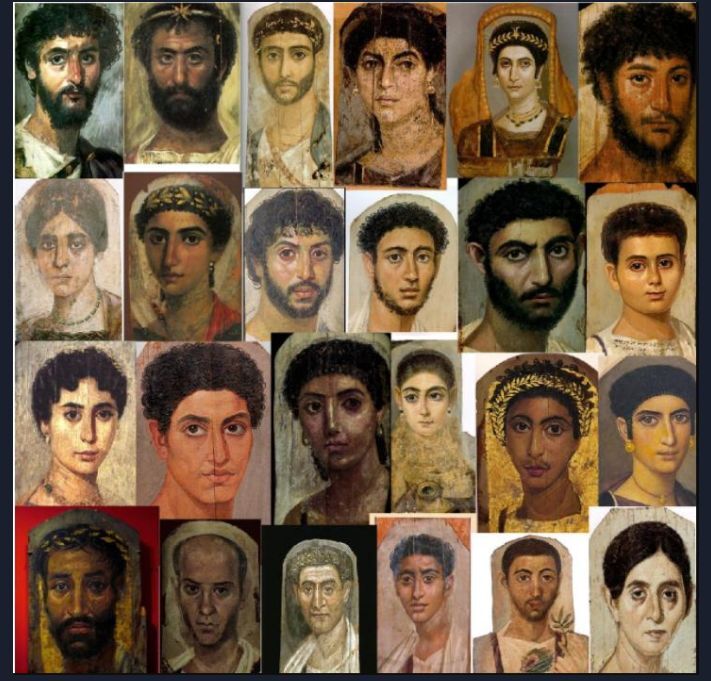
The excavations, conducted under the auspices of Egypt's Ministry of Antiquities, have yielded several dozen tombs dug into the clay soil. The burials are oriented according to traditional Egyptian rites, but the objects accompanying them tell a far more complex story: mummy masks with Hellenistic features, statuettes of ancient Egyptian deities alongside representations of Greco-Roman gods, and inscriptions in both Greek and Demotic script carved on the same limestone sarcophagi.
An identity in transition
Since Alexander the Great's conquest in 332 BCE and the advent of the Ptolemaic dynasty, Egypt had been experiencing a phenomenon unique in the ancient world: a deep syncretization between local funerary traditions and Greek, then Roman, influences. Tell Kom Aziza provides a particularly striking illustration.
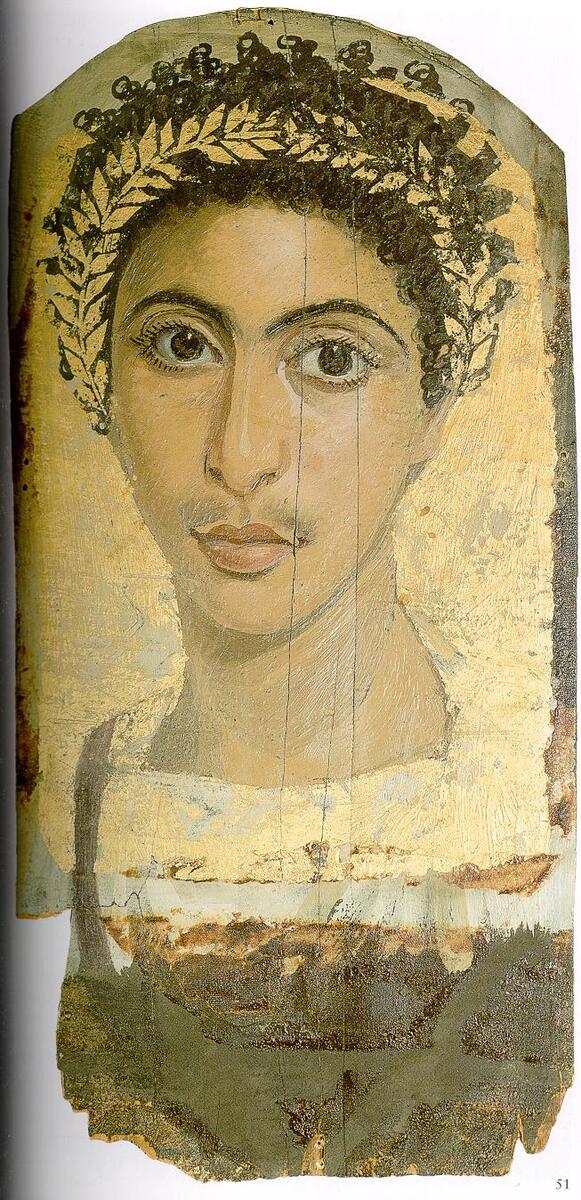
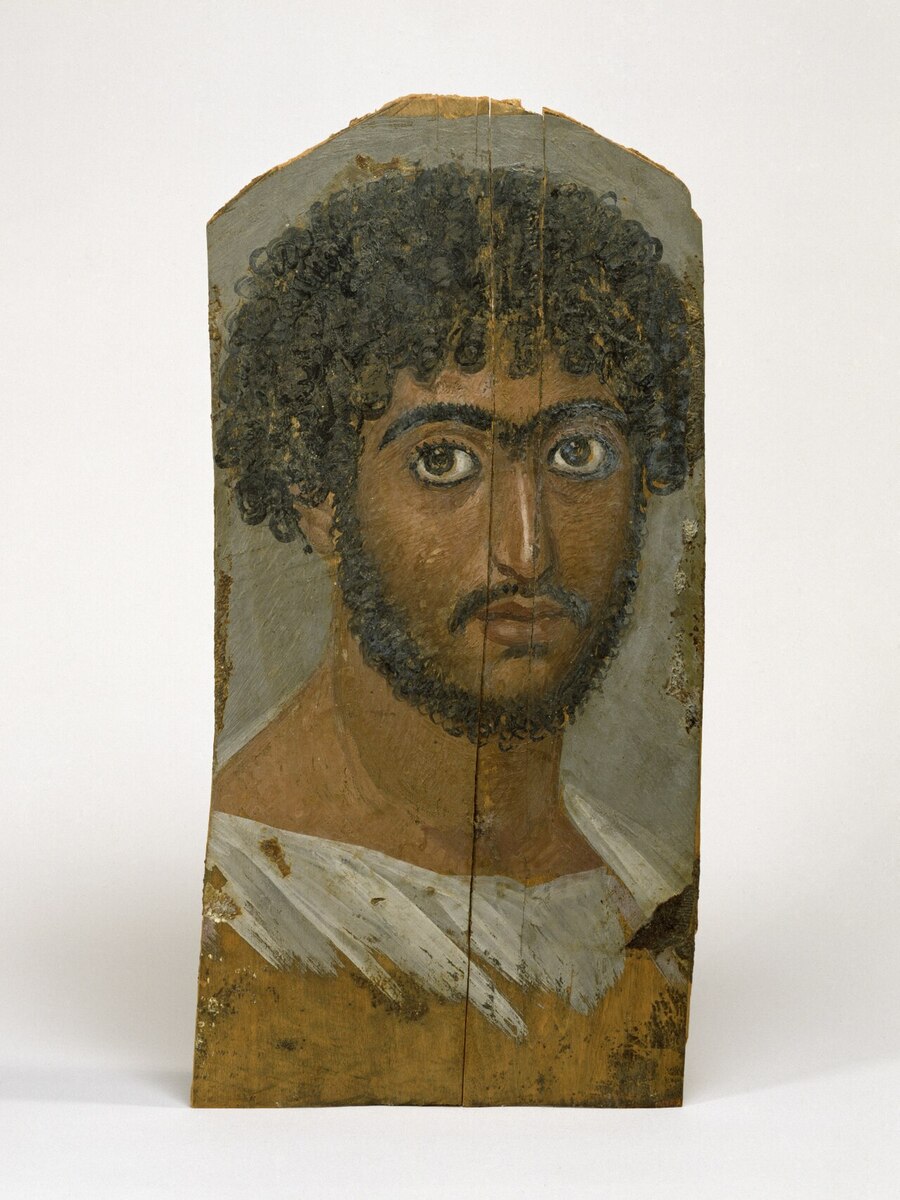
The recovered bodies were mummified according to traditional Egyptian procedures, with linen bandages wound around the body, organs placed in canopic jars, and aromatic resins applied. But the portraits adorning some of the mummies break radically with pharaonic iconography. Painted in encaustic wax on tablets of cedar or sycamore wood, these faces gaze at us with an almost photographic intensity, wide-eyed, curly-haired, dressed in Roman fashion.
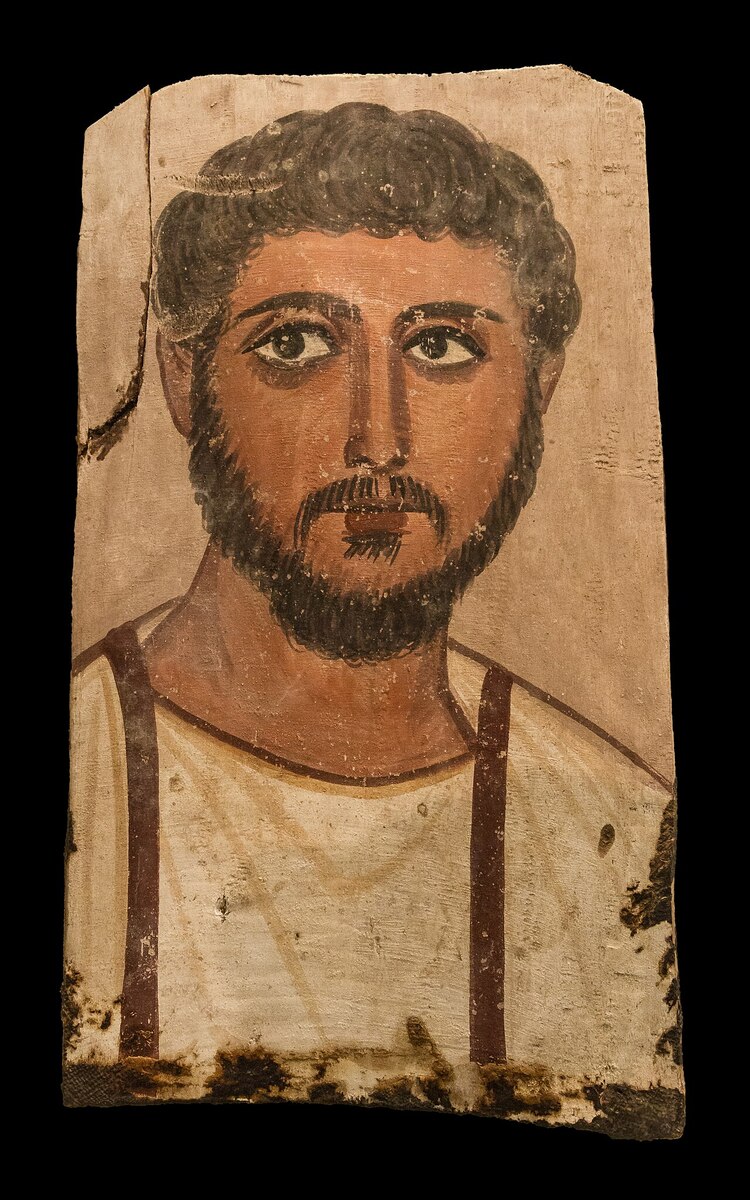
This tradition, which specialists call "Fayum portraits" after the region where the first specimens were discovered in the 19th century, constitutes one of the most remarkable legacies of Greco-Roman Egypt to world art history. Thousands of these portraits have been identified to date, but each new discovery, such as that at Tell Kom Aziza, adds precious information about their geographic distribution and stylistic evolution across several centuries.
What the bodies reveal
Laboratory analyses conducted on the Tell Kom Aziza mummies have yielded previously unknown information about the population buried in this cemetery. CT scans allowed researchers to reconstruct morphologies without unrolling the bandages, revealing individuals of all ages, from newborns to the elderly, as well as women of childbearing age, some of whom were pregnant at the time of death.
Stable isotope analyses of teeth and bones indicate a cereal-rich diet, with notable animal protein consumption for certain individuals, suggesting differentiated living standards within the same community. Paleopathological studies have identified arthritis, healed bone traumas, and dental cavities characteristic of a diet containing sugar, consistent with the production of dates and grapes in the Delta region.
Gods and syncretic rituals
Perhaps the most remarkable aspect of the Tell Kom Aziza tombs is the persistence of traditional Egyptian beliefs beneath a Greek and Roman veneer. Faience amulets in the shape of the udjat eye and sacred scarab were found alongside bronze statuettes of Greco-Egyptian deities such as Harpocrates (the child Horus adopted by the Greek pantheon) and Serapis, the syncretic deity invented under the Ptolemies to unite Greeks and Egyptians around a common cult.
Funerary papyri inscribed in Demotic Greek attest to the continued practice of an adapted Book of the Dead, in which the names of the deceased alternate between Egyptian and Greek forms, sometimes within the same document. This hybridization is not a sign of confusion, but of a conscious strategy for cultural survival in the face of successive powers that attempted, with varying success, to impose their dominant culture.
Toward a better understanding of plural Egypt
Tell Kom Aziza joins a series of recent discoveries that are reshaping our understanding of the Greco-Roman period in Egypt. Too long seen as a mere interlude between pharaonic glory and Byzantine Christianization, this six-century period now appears as a laboratory of exceptional fecundity, where the intellectual and artistic foundations of much of medieval and modern Mediterranean culture were forged.
Excavations continue at the site. Archaeologists hope to reach deeper levels of the tell, which could yield even older remains, perhaps contemporary with Alexander's conquest itself. Each tomb, each portrait, each amulet adds another face to the plural Egypt of which Tell Kom Aziza has become one of the most eloquent witnesses.
No comments yet. Be the first.