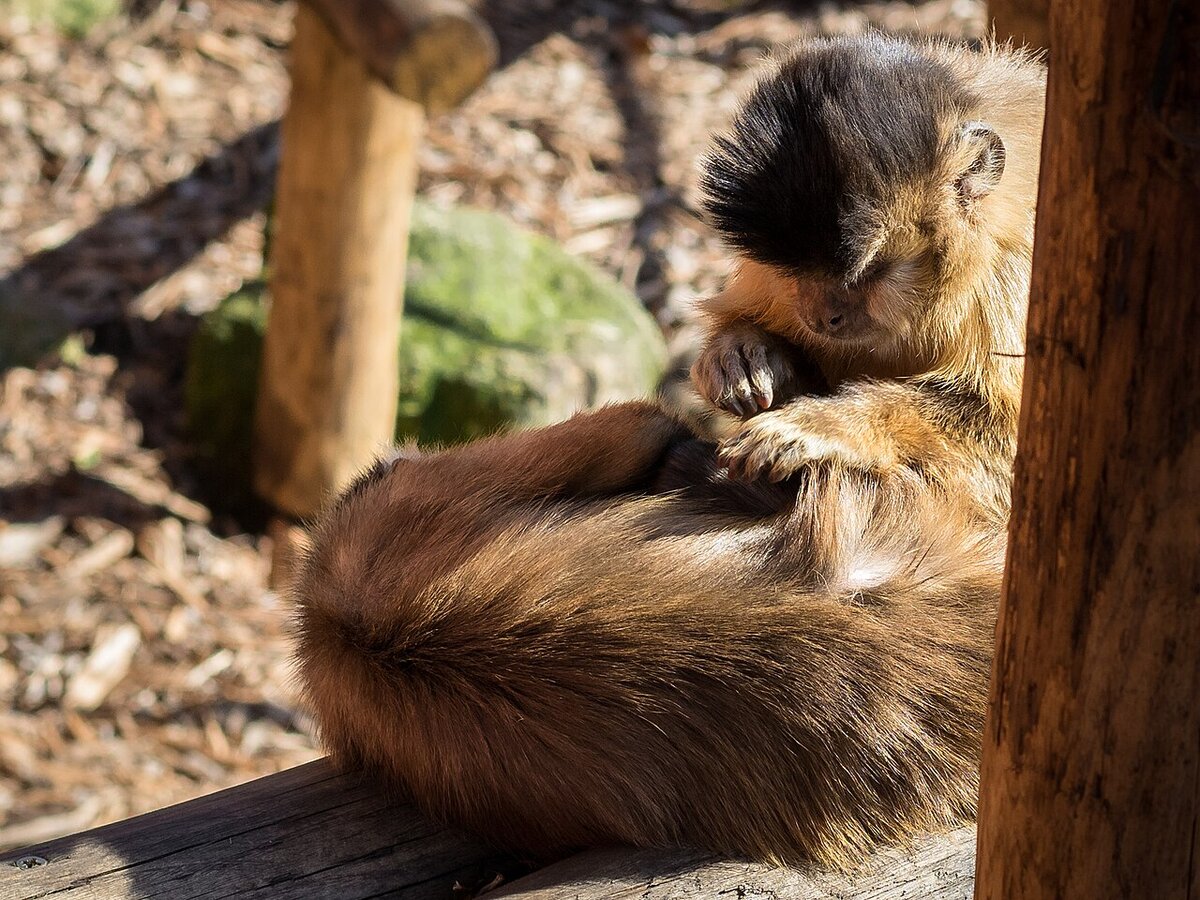
An apparently trivial observation: primates grooming each other, exploring one another's fur with fingers and lips. Yet this behaviour, ubiquitous among monkeys and great apesgreat apesThe family of great apes (Hominidae) comprising orangutans, gorillas, chimpanzees, bonobos and humans.→, conceals one of the founding mechanisms of primate social life, from which our own origins are inseparable. And when palaeontologists examine the fossilised teeth of our homininHomininMember of the subtribe Hominina, comprising the human lineage (Homo, Australopithecus, Paranthropus…) but excluding orangutans and gibbons. The term progressively replaces "hominid" in its narrow sense.→ ancestors under an electron microscope, they discover traces of an even more intimate practice: mutual tooth cleaning, which leaves characteristic grooves in the enamel and reveals an unsuspected social dimension.
Allogrooming: far more than a matter of hygiene
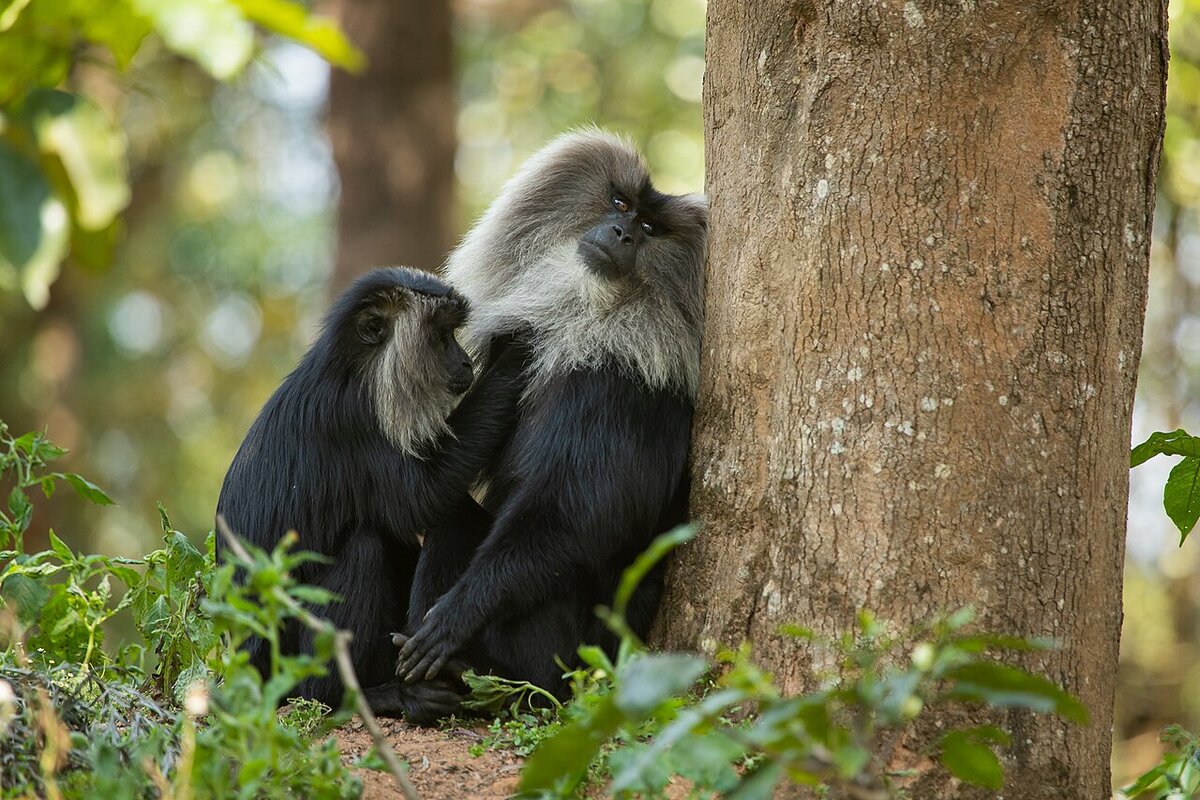
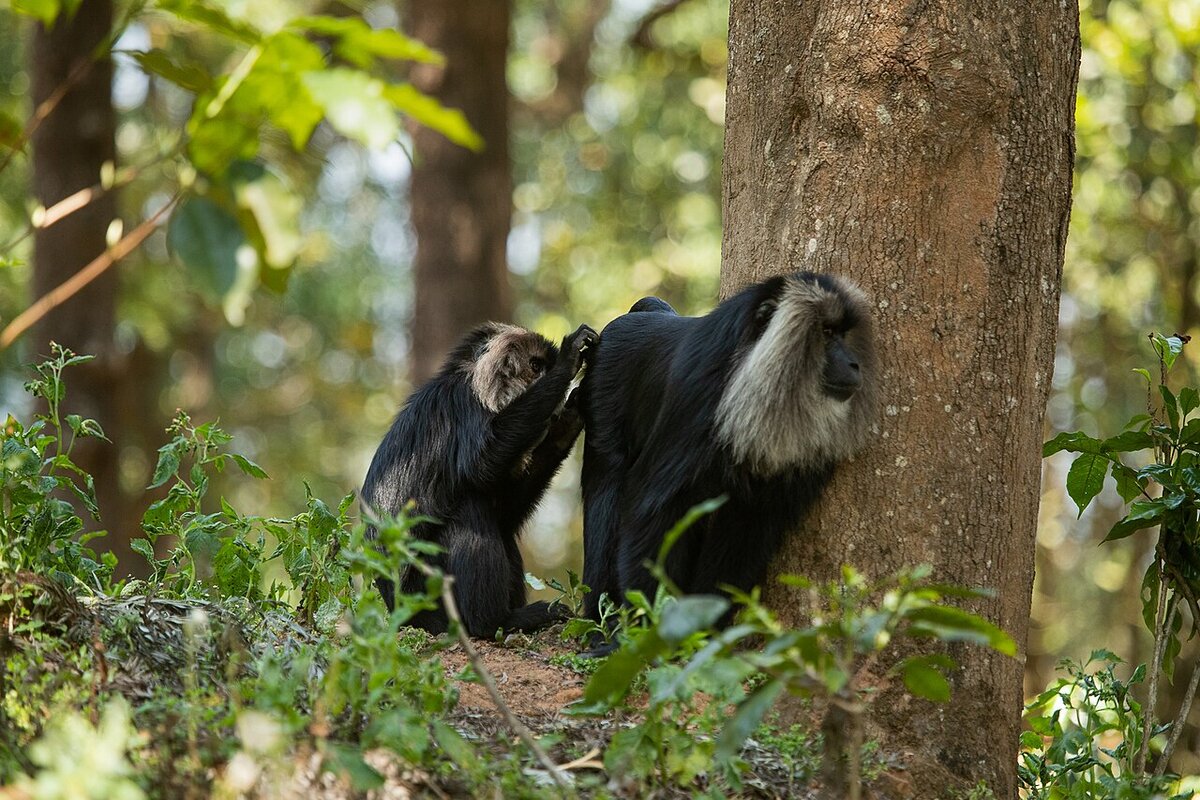
Social grooming, or allogrooming, refers to an individual cleaning another's body: sorting through fur for parasites, cleaning wounds, inspecting skin. In non-human primates, this behaviour occupies between 10 and 20% of the waking time of many species. For decades, researchers interpreted it primarily as a hygienic service, a form of utilitarian exchange in which the groomer removes ticks and lice in return for a reciprocal service.
British primatologist Robin Dunbar profoundly disrupted this view in the 1990s. By compiling data across dozens of primate species, he showed that the time devoted to allogrooming correlates with group social size, not with parasite load. Species living in larger groups spend more time grooming each other, even when this far exceeds what hygiene alone would require. Allogrooming, Dunbar concluded, is primarily a social management tool: it builds bonds of trust, defuses post-conflict tension, signals alliances, and enables social climbing.
Dunbar extended the analogy further: in humans, language would have taken over from allogrooming to fulfil these same social functions, allowing us to "groom" multiple people simultaneously through conversation, gossip, and shared narrative.
Grooves in fossil teeth: a million-year-old practice
What ethologists observe directly in living primates, palaeontologists now detect in the fossil record via scanning electron microscopy (SEM). On the fossilised teeth of many hominins, from Australopithecus to NeanderthalsNeanderthalsA fossil humanity of Eurasia, robust and cold-adapted, extinct around 40,000 years before present.→, researchers observe rectilinear, parallel furrows carved into the enamel: toothpicking grooves. These marks, distinct from dietary wear patterns, are produced by inserting a pointed object between teeth to extract food debris or parasites.
In contemporary non-human primates, this behaviour has been observed in several species. Capuchins in Brazil have been filmed using small sticks to pick their own teeth and those of companions. Chimpanzees use thin plant stems to clean interdental spaces. Leslea Hlusko (Berkeley) demonstrated in a controlled experiment published in Current Anthropology in 2003 that the use of grass stems as toothpicks by primates produces exactly the grooves found on fossilised hominin teeth millions of years old.
Right-handed Neanderthals: the evidence in their teeth
One of the most spectacular applications of dental groove analysis involves detecting manual lateralisation in Neanderthals. Work by David Frayer (Kansas) and colleagues, published in Laterality, examined the orientation of grooves on the upper incisors of Neanderthal specimens. The technique of using a tool held in one hand while maintaining the tooth with the other leaves grooves oriented in a characteristic direction depending on the dominant hand.
Result: Neanderthals at most European sites were predominantly right-handed, in proportions similar to those observed in modern human populations (around 85-90% right-handers). This manual dominance, which implies cerebral asymmetry, is one of the most robust cognitive signatures of mental complexity. Neanderthals shared this trait with us, for at least 500,000 years.
Tooth cleaning as social bond: shattering the purely utilitarian myth
What all this research reveals is the collapse of a utilitarian myth: the idea that bodily care between individuals is primarily functional, a hygiene service rendered in exchange for a service returned. The reality is far richer. Tooth picking, like fur grooming, is above all an act of bonding. It implies mutual trust (allowing someone to insert an object into your mouth), reciprocity, and attention paid to the other.
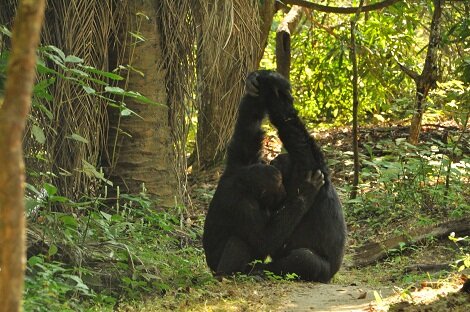
Field observations illustrate this strikingly. Among the chimpanzees studied by Nakamura in Japan, group grooming sessions ("grooming gatherings") sometimes bring together up to five individuals around a single central individual. These complex social events far exceed the simple logic of parasite-for-service exchange. Some chimpanzee communities practise "handclasp grooming", a variant in which both individuals raise their arms and hold hands while grooming each other: this behaviour, which varies from community to community, is interpreted as a cultural tradition transmitted locally.
For fossil hominins, dental grooves open a window onto similar behaviours. When a Neanderthal 100,000 years ago prepared to pick a companion's teeth with a grass stemstemThe narrowed base of a point, used to haft it onto a shaft or handle.→ or bone splinter, they were not merely removing a trapped food particle. They were investing in a social network, renewing an alliance, expressing belonging. Behaviours we did not invent, but inherited.
No comments yet. Be the first.