−56 Ma
Paléoclimat
Il y a 56 millions d'années, un réchauffement comparable au nôtre a ravagé les forêts pendant 100 000 ans
Lire l'article →
Ph
−7 Ma
Premiers hominines
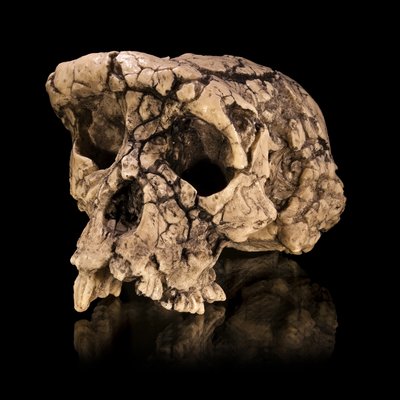
Sahelanthropus tchadensis (Toumaï) au Tchad : le plus ancien hominine connu, déjà bipède, marque le début d'une aventure évolutive de 7 millions d'années vers Homo sapiens.
Lire l'article →
−7 Ma
Environnement
Pliocène et Pléistocène inférieur : le monde qui a forgé nos ancêtres
Lire l'article →
−7 Ma
Toumai, le Nouvel Ancetre
Lire l'article →
−6 Ma
Orrorin tugenensis, l'Homme du Millenaire aux origines de la bipédie
Lire l'article →
−4,4 Ma
Ardipithecus ramidus : Ardi, aux racines de l'humanité
Lire l'article →
−4,2 Ma
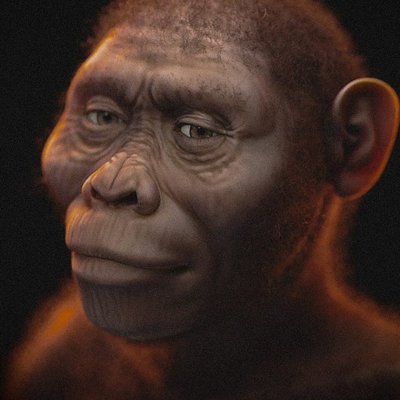
Australopithecus anamensis, l'ancetre de Lucy et le premier australopitheque
Lire l'article →
Au
−4 Ma
Évolution
« La marche du progrès » : pourquoi cette image de l'évolution est fausse
Lire l'article →
−3,5 Ma
Kenyanthropus platyops : le visage plat qui rebat les cartes du Pliocène
Lire l'article →
−3,3 Ma
L'industrie lithique : 3,3 millions d'annees de pierre taillee
Lire l'article →
−3,2 Ma
−2,6 Ma
Paléoanthropologie
Paranthropus : le cousin robuste qui faillit régner sur l'Afrique
Lire l'article →
−2,5 Ma
Paranthropus, les australopitheques robustes : une branche sans avenir
Lire l'article →
Hh
−2,3 Ma
−2 Ma
−2 Ma
Australopithecus sediba, le chaînon manquant sud-africain ?
Lire l'article →

He
−1,9 Ma
Homo ergaster, l'ancetre africain de l'Homme droit
Lire l'article →
−1,9 Ma
−1,8 Ma
Homo georgicus, le premier homme hors d'Afrique
Lire l'article →
−1,8 Ma
Évolution humaine
Le feu préhistorique : de la capture à la maîtrise, 1,8 million d'années d'une révolution
Lire l'article →
−1,8 Ma
Homo erectus transportait le feu dans la grotte de Wonderwerk il y a 1,8 million d'années
Lire l'article →
−1,8 Ma
Paléolithique inférieur
Kokiselei (Kenya) : le plus ancien site acheuléen connu, daté de 1,76 million d'années. Des hominines du type Homo ergaster fabriquent déjà des bifaces, une technologie qui perdurera 1,46 million d'années sur trois continents.
Lire l'article →
−1,4 Ma
Hominines
Lac Turkana : les empreintes de huit Paranthropus boisei révèlent un cousin de 1,80 m qui vivait en bande
Lire l'article →
−1,1 Ma
Paleolithique
Wonderwerk : des foyers dates entre 1 et 1,8 million d'années confirment la maitrise du feu par Homo erectus
Lire l'article →
−1 Ma
Paléogénétique
Une lignée humaine « fantôme » redessine le scénario de nos origines
Lire l'article →
−800 000
Paléolithique
Il y a 850 000 ans, Homo antecessor dévorait même les enfants
Lire l'article →
Pléistocène moyen
Paléolithique inférieur & moyen · −780 000 à −130 000
−780 000
Paléolithique inférieur
Gesher Benot Ya'aqov (Israël) : des hominines cuisent du poisson sur les rives du Jourdain, repoussant de 530 000 ans le plus ancien épisode de cuisson de poisson connu.
Lire l'article →
−773 000
Paléolithique inférieur
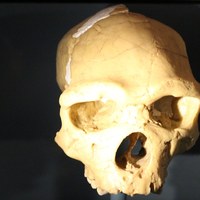
Grotte aux Hominidés (Carrière Thomas I, Casablanca, Maroc) : fragments crâniens d'Homo erectus vieux de 773 000 ans, à la base de la lignée menant à Homo sapiens. Publiée dans Nature en janvier 2026, l'étude comble un vide de 400 000 ans dans le registre fossile africain.
Lire l'article →
Hd
−700 000
dossiers
Homo heidelbergensis : l'ancetre commun des Neandertals et de l'Homo sapiens
Lire l'article →
−500 000
Archéologie
Un marteau en os d'elephant vieux de 500 000 ans decouvert a Boxgrove, en Angleterre
Lire l'article →
−500 000
−430 000
Paléolithique moyen
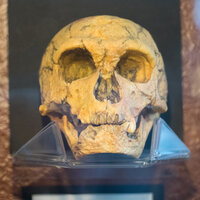
Sima de los Huesos (Atapuerca, Espagne) : 29 individus d'Homo heidelbergensis déposés au fond d'un puits naturel, possible premier geste funéraire organisé de l'humanité.
Lire l'article →
−430 000
Hn
−400 000
Paléolithique inférieur
Bilzingsleben (Allemagne) : Homo heidelbergensis chasse systématiquement le castor eurasiatique. 94 individus identifiés avec des stries de dépouillement, première preuve directe de chasse spécialisée à la fourrure en Europe.
Lire l'article →
−400 000
Dv
−335 000
Hs
−300 000
hominides
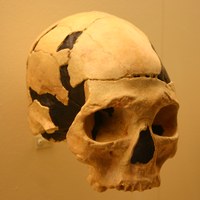
Homo sapiens : 300 000 ans d'histoire, des origines africaines au monde entier
Lire l'article →
−300 000
−300 000
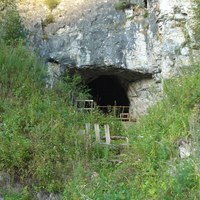
Les Dénisoviens : le crane Dragon Man et la reconstitution de leur visage
Lire l'article →
−300 000
Archéologie
Une grotte scellée depuis 300 000 ans révèle un clan d'hominidés mystérieux au Carmel
Lire l'article →
−200 000
Middle Stone Age
Border Cave (Lebombo, Afrique du Sud) : les plus anciens lits végétaux connus. Herbe fraîche disposée sur de la cendre pour repousser insectes et humidité, litière brûlée avant chaque renouvellement — sur 150 000 ans.
Lire l'article →
−175 000
Paléoanthropologie
Biache-Saint-Vaast : le plus ancien Néandertalien du nord de la France
Lire l'article →
−160 000
Paléolithique moyen
Une mandibule dénisovienne sur le plateau tibétain : les Dénisoviens, révélés par l'ADN, occupaient déjà la haute Asie.
Lire l'article →
−153 000
Paléoanthropologie
Afrique du Sud : les plus anciennes empreintes d'Homo sapiens au monde
Lire l'article →
Pléistocène supérieur
Néandertal & Sapiens · −130 000 à −40 000
−123 000
Paleolithique moyen
Néandertal dans la forêt tempérée : l'environnement eemien reconstitue a Caours, dans la Somme
Lire l'article →
−120 000
Paléolithique moyen
Es-Skhul (mont Carmel) : un enfant aux traits mêlés, possible plus ancien hybride sapiens-néandertalien.
Lire l'article →
−120 000

Hf
−100 000
Paléolithique moyen
Sépultures intentionnelles d'Homo sapiens au Proche-Orient. Cohabitation avec Néandertal.
Lire l'article →
−100 000
−88 000
Paléolithique moyen
Désert du Néfoud (Arabie Saoudite) : la phalange d'Al Wusta, os d'Homo sapiens le plus ancien jamais trouvé hors d'Afrique et du Levant. L'Arabie verte, carrefour méconnu de l'humanité.
Lire l'article →
−80 000
Archéologie
Des pointes de projectiles vieilles de 80 000 ans decouvertes en Ouzbekistan
Lire l'article →
−75 000
Middle Stone Age
Blombos Cave (Afrique du Sud) : perles en coquillage, blocs d'ocre gravés et dessin, symbolisme 30 000 ans avant l'Europe.
Lire l'article →
−75 000
Paléogénomique
Norvège : une grotte livre le plus ancien écosystème arctique d'Europe, 75 000 ans figés dans la pierre
Lire l'article →
−74 000
Paléolithique moyen
Super-éruption du Toba (Sumatra) : la plus grande éruption volcanique des deux derniers millions d'années (IEV 8, ~2 800 km³). Selon une théorie célèbre mais aujourd'hui contestée, elle aurait réduit l'humanité à quelques milliers d'individus.
Lire l'article →
−70 000
Sortie d'Afrique
Grande expansion d'Homo sapiens hors d'Afrique ; métissages avec Néandertal et Dénisoviens.
Lire l'article →
−70 000
Actualités
Pendant 20 000 ans, nos ancêtres ont disparu des radars : les chercheurs ont retrouvé la preuve de leur passage
Lire l'article →
−67 800
Art parietal
Une main griffue a Sulawesi : la plus ancienne peinture parietale du monde (67 800 ans)
Lire l'article →
−67 000
Homo luzonensis : la surprenante espece humaine des Philippines
Lire l'article →
−66000
Maltravieso : les empreintes de mains les plus anciennes d'Europe étaient neandertalieenes
Lire l'article →
−65 000
Peuplement
Madjedbebe : Homo sapiens atteint Sahul (Australie) après la plus ancienne navigation hauturière connue.
Lire l'article →
−65 000
Archéologie
Un campement néandertalien de 70 000 ans mis au jour dans la grotte de Prado Vargas, à Burgos
Lire l'article →
−60 000
Paléolithique supérieur
Homo floresiensis, le « hobbit » de Florès, s'éteint à l'arrivée d'Homo sapiens en Asie du Sud-Est.
Lire l'article →
−60 000
Paléolithique moyen
Umhlatuzana (KwaZulu-Natal, Afrique du Sud) : des microliths en quartz portent des alcaloïdes de Boophone disticha. Plus anciens projectiles empoisonnés connus, attestant une connaissance pharmacologique remarquable.
Lire l'article →
−60 000
Actualités
En altitude dans les Alpes, un atelier néanderthalien bouscule l'image d'un homme des plaines
Lire l'article →
−60 000
Paléoanthropologie
Néandertal digérait les insectes, une faculté que nous avons perdue
Lire l'article →
−55 000
Actualités
Une simple dent bouleverse la date d'arrivée d'Homo sapiens en Asie du Sud-Est
Lire l'article →
−53 000
Paléolithique moyen
Grotte d'Amud (Israël) : Amud 7, nourrisson néandertalien de 6 mois, avait déjà la taille d'un enfant sapiens de 13 mois. Croissance deux fois plus rapide que la nôtre.
Lire l'article →
−53 000
Actualités
Dans une grotte d'Israël, la tombe d'un nourrisson néanderthalien révèle un geste inattendu
Lire l'article →
−52 500
Paléogénétique
L'ADN de 27 Néandertaliens révèle une population connectée en Europe du Nord-Ouest
Lire l'article →
−49000
El Sidron : l'ADN d'une famille néandertalienne révélé une société organisée
Lire l'article →
-48 000
Paléolithique
Pedra Furada : quand le Brésil défie la chronologie du peuplement américain
Lire l'article →
−47 000
Paléolithique supérieur
Belgique et nord de la France : les génomes de 27 Néandertaliens révèlent une santé génétique normale — pas d'endogamie, bonne diversité. L'extinction reste une énigme.
Lire l'article →
−45 000
−45 000
Paléolithique moyen → supérieur
Transition MP/UP : Néandertal et Homo sapiens coexistent. Châtelperronien, Aurignacien, parures, ADN mêlé. Colloque Collège de France 2026.
Lire l'article →
−45000
Bacho Kiro : Homo sapiens etait en Europe il y a au moins 45 000 ans
Lire l'article →
−45 000
Néandertaliens
Massacre et cannibalisme il y a 45 000 ans : femmes et enfants néandertaliens ciblés dans une grotte belge
Lire l'article →
Paléolithique supérieur
Homo sapiens en Europe · −40 000 à −10 000
−40 000
Paléolithique supérieur
Extinction de Néandertal : climat, faible diversité génétique et incompatibilité sanguine se conjuguent.
Lire l'article →
−40 000
Aurignacien
Vénus de Hohle Fels : la plus ancienne statuette féminine connue, en ivoire de mammouth.
Lire l'article →
−40 000
−36 000
Aurignacien
Grotte Chauvet : plus de 1 000 dessins, 425 figures animales. Le plus ancien chef-d'œuvre connu.
Lire l'article →
−35 000
−30 000
Gravettien
Vénus de Willendorf. Apogée de l'art mobilier et des statuettes féminines en Europe.
Lire l'article →
−30000
Les signes géométriques de l'art pariétal : un langage oublié du Paléolithique
Lire l'article →
−30 000
Le Paléolithique supérieur en Russie : Kostenki, Zaraysk, Avdeevo
Lire l'article →
−30 000
Rites funéraires
Sungir : les enfants enterrés avec des milliers de perles il y a 30 000 ans
Lire l'article →
−29 000
−28 000
Gravettien
Grande Grotte d'Arcy-sur-Cure : les plus anciennes peintures encore visibles de France (mammouths, lionne).
Lire l'article →
−27 000
Gravettien
Grotte Cosquer (Marseille) : mains négatives et bestiaire marin dans une grotte aujourd'hui engloutie sous la Méditerranée.
Lire l'article →
−27000
Gargas : le mystere des 231 mains mutilees du Gravettien
Lire l'article →
−26 000
Gravettien
Dolní Věstonice (Moravie) : la Vénus de Věstonice, plus ancienne figurine en céramique cuite du monde, et un four de cuisson vieux de 28 000 ans.
Lire l'article →
-25 000
La noix de betel, premiere drogue de l'humanite il y a 25 000 ans
Lire l'article →
−25000
La Dame de Brassempouy : le plus ancien visage humain jamais sculpté
Lire l'article →
−25 000
Les Venus prehistoriques : catalogue et interpretations
Lire l'article →
−23 000
Dernier maximum glaciaire
Empreintes humaines de White Sands : présence en Amérique bien plus ancienne qu'on ne le pensait.
Lire l'article →
−20000
Le Solutréen : l'apogée de l'industrie lithique paléolithique
Lire l'article →
−20 000
−17 000
−17000
Font-de-Gaume : la derniere grotte de France aux peintures polychromes ouvertes au public
Lire l'article →
−17000
Altamira : la chapelle Sixtine de la prehistoire et le scepticisme du XIXe siecle
Lire l'article →
−16 000
Peuplement des Amériques
Le peuplement des Amériques : Béringie, White Sands et la fin du modèle Clovis
Lire l'article →
−15 000
Magdalénien
Grotte de la Mouthe (Dordogne) : sa découverte fera reconnaître l'existence de l'art pariétal paléolithique.
Lire l'article →
−15 000
−14500
Les Natoufiiens : les premiers sédentaires, deux millénaires avant l'agriculture
Lire l'article →
−14 400
Paléolithique supérieur
Grotte della Bàsura (Toirano, Ligurie, Italie) : cinq humains dont deux enfants de 3 et 6 ans, et un chien de 40 kg, explorent une grotte infestée d'ours à la lueur de torches en pin. Les empreintes entremêlées attestent la vie sociale partagée entre humains et chien domestique.
Lire l'article →
−14 000
Paléolithique supérieur
Bonn-Oberkassel : premier chien domestique attesté, enterré aux côtés d'humains sur le Rhin.
Lire l'article →
−14000
Le Jômon : 14 000 ans de culture préhistorique au Japon
Lire l'article →
−14000
Sculptures Préhistoriques : le Roc aux Sorciers
Lire l'article →
−14000
Les bisons en argile du Tuc d'Audoubert : chefs-d'oeuvre en 3D du Magdalénien
Lire l'article →
−13 300
Art paléolithique
Pour la première fois, les bisons de Font-de-Gaume ont une date absolue
Lire l'article →
−13000
Clovis : les premiers chasseurs d'Amérique du Nord
Lire l'article →
−13 000
Actualités
Il y a 13 000 ans, des hommes du Paléolithique gravaient déjà une carte 3D dans la forêt de Fontainebleau
Lire l'article →
−12000
L'extinction des mégafaunes du Pléistocène : chasse, climat ou les deux ?
Lire l'article →
−12000
Romito 2 : l'invalide de l'age glaciaire soigné par les siens
Lire l'article →
Mésolithique & Néolithique
Révolutions agricoles · −10 000 à −3 300
−10 000
Néolithique précéramique
Tell es-Sultan (Jéricho) : tour de pierre de 8,5 m de haut, la plus ancienne structure architecturale connue. La ville la plus anciennement habitée du monde est déjà fortifiée.
Lire l'article →
−10 000
Révolution néolithique
Croissant fertile : domestication du blé, de l'orge, du mouton et du bœuf. Naissance des villages.
Lire l'article →
-10 000
Les Jomon du Japon ont developpe des adaptations genetiques au froid uniques, revele Science Advances
Lire l'article →
−10 000
Archéologie
Le retour des humains en Grande-Bretagne apres la glaciation : deux vagues separees par le Dryas recent
Lire l'article →
−10 000
−10 000
−10 000
Néolithique
Le Néolithique : quand l'humanité a inventé l'agriculture, la ville et la guerre
Lire l'article →
−10 000
Néolithique
Le Néolithique : quand l'humanité a inventé l'agriculture, la ville et la guerre
Lire l'article →
−9 600
Néolithique
Göbekli Tepe : une statue humaine emmurée depuis 12 000 ans, offrande des premiers bâtisseurs
Lire l'article →
-9 600
Les "sacs a main" de Gobekli Tepe seraient les plus anciens plans architecturaux du monde
Lire l'article →
−9 500
Néolithique précéramique
Göbekli Tepe et Karahan Tepe : sanctuaires monumentaux à piliers en T, antérieurs à l'agriculture.
Lire l'article →
−9 500
−9000
Les femmes chasseuses : quand la préhistoire remet en cause le mythe de "l'homme-chasseur"
Lire l'article →
−9 000
−8 000
Mésolithique
Derniers chasseurs-cueilleurs : hautes Pyrénées et bords de Seine (Vitry) fréquentés en continu.
Lire l'article →
−8 000
−8 000
Mésolithique
Sous les grues du Grand Paris, un campement de chasseurs-cueilleurs de 10 000 ans
Lire l'article →
−7500
Catalhoyuk : la ville neolithique sans rues ni portes
Lire l'article →
−7 000
−7 000
−6 500
Chasseurs-cueilleurs
Texas : des armes de chasse vieilles de 6 500 ans retrouvées dans le désert de Big Bend
Lire l'article →
−6 200
Mésolithique
Le tsunami de Storegga balaie Doggerland, la plaine qui reliait la Grande-Bretagne au continent.
Lire l'article →
−6 000
Néolithique
L'agriculture gagne l'Europe occidentale. Céramiques, mégalithes, sociétés paysannes.
Lire l'article →
−6000
Le Tassili n'Ajjer : 15 000 peintures rupestres pour raconter le Sahara vert
Lire l'article →
−6000
Les Amants de Valdaro : 6 000 ans enlacés sous la terre de Mantoue
Lire l'article →
−6 000
Amnya : des chasseurs-cueilleurs sibériens ont bâti les plus anciennes fortifications du monde il y a 8 000 ans
Lire l'article →
−6 000
Neolithique
Les amants de Valdaro : un couple enlace depuis 6 000 ans decouverts pres de Mantoue
Lire l'article →
−6 000
La lignee fantome de Colombie : une population prehistorique disparue sans laisser de traces
Lire l'article →
−6 000
Art rupestre
Wadi Mathendous : des girafes gravées dans le grès, l'art rupestre d'un Sahara oublié
Lire l'article →
−5 000
Archéologie
Un complexe circulaire de l'âge du Bronze découvert au sommet du mont Papoura en Crète
Lire l'article →
−5000
Villages lacustres du Néolithique : les cités sur l'eau des Alpes préhistoriques
Lire l'article →
−5 000
Actualités
Dans les Pyrénées à 2 200 m d'altitude, un atelier préhistorique de cuivre fonctionnait depuis 7 000 ans
Lire l'article →
−5 000
Paléogénétique
Sahara vert : l'ADN de deux momies révèle une lignée nord-africaine oubliée
Lire l'article →
−4 500
Mégalithisme breton
Carnac (Bretagne) : 3 000 menhirs dressés en alignements sur 4 km, le plus grand ensemble mégalithique du monde.
Lire l'article →
−4 500
Chalcolithique
Des grains germés vieux de 6 500 ans : la plus ancienne bière de Bulgarie brassée dans la cité du sel de Solnitsata
Lire l'article →
−4 500
Archéologie
Cannibalisme neolithique en Espagne : des ossements humains traces comme des proies animales
Lire l'article →
−4 000
Actualités
Sous la vase du Nord dormait depuis des millénaires une pirogue néolithique unique en France
Lire l'article →
−4 000
−3 600
Mégalithisme
Ġgantija (Gozo, Malte) : les plus vieilles structures en pierre de taille debout du monde, antérieures de 1 000 ans aux pyramides d'Égypte.
Lire l'article →
−3 500
Botai : les premiers chevaux domestiqués n'étaient peut-être pas ceux qu'on croyait
Lire l'article →
−3 500
−3 400
−3 400
Archéologie
Perdigões : le sanctuaire préhistorique portugais qui accueillait l'Europe entière
Lire l'article →
Chalcolithique & Âge du bronze
Métaux · mégalithes · écriture · −3 300 à −800
−3 300
Chalcolithique
Ötzi meurt dans les Alpes : la plus ancienne momie naturelle, et une enquête criminelle vieille de 5 300 ans.
Lire l'article →
−3 300
Âge du bronze
Invention de l'écriture au Proche-Orient : sortie de la préhistoire. Premières cités-États.
Lire l'article →
−3 200
Mégalithisme
Newgrange (Irlande) : tumulus-couloir de 85 m de diamètre aligné sur le lever du soleil du solstice d'hiver, plus ancien que Stonehenge et les Pyramides.
Lire l'article →
−3 200
Archéologie
L'ADN ancien revele l'effondrement genetique des batisseurs de megalithes en Europe
Lire l'article →
−3200
L'invention de l'ecriture en Mesopotamie : quand la comptabilite créa le langage ecrit
Lire l'article →
−3 100
Préhistoire des Orcades : de Skara Brae au Ness of Brodgar
Lire l'article →
−3 100
Le disque de Sabu : l'objet mystérieux de Saqqara qui defie les égyptologues depuis 1936
Lire l'article →
−3 000
Mégalithisme
Premières grandes pierres de Stonehenge ; sa pierre d'autel viendra d'Écosse, à plus de 700 km.
Lire l'article →
−3 000
Stonehenge : les enigmes du monument
Lire l'article →
−3 000
−3 000
Civilisation de l'Indus
Dholavira : comment une ville de l'Indus a survécu dans le désert
Lire l'article →
−3 000
Égypte ancienne
Jabal al-Tayr : une nécropole de 5000 ans aux sources de l'architecture des pyramides
Lire l'article →
−3 000
Archéologie
Une forteresse de 5 000 ans surgit d'une forêt roumaine, révélée par le LiDAR
Lire l'article →
−2 900
Égypte ancienne
Gabal El-Teir : deux tombes archaïques éclairent la genèse de l'architecture des pyramides
Lire l'article →
−2 900
Rites & croyances
Un squelette vieux de 5 000 ans découvert dans un four néolithique en Allemagne , un possible sacrifice humain
Lire l'article →
−2 800
Paléogénétique
Le premier génome complet d'un Égyptien de l'Ancien Empire révèle ses racines mésopotamiennes
Lire l'article →
−2700
Saqqara : secrets de construction
Lire l'article →
−2700
Saqqarah : la revolution architecturale de Djeser
Lire l'article →
−2 700
Civilisations
Égypte, L'Ancien Empire : grandeur et chute d'une première civilisation
Lire l'article →
−2650
Meidoum : secrets d'une construction énigmatique
Lire l'article →
−2 600
Ancien Empire égyptien
Égypte : du mastaba à la pyramide à degrés de Djéser. Naissance de l'architecture monumentale en pierre.
Lire l'article →
−2600
Dahchour : les pyramides de Snefrou
Lire l'article →
−2600
La civilisation de l'Indus : Harappa, Mohenjo-daro et l'énigme harappéenne
Lire l'article →
−2 600
−2 600
Mésopotamie
Mésopotamie, la redécouverte des trésors d'Irak : un documentaire ARTE au cœur des fouilles
Lire l'article →
−2 600
−2 600
Documentaire Arte
Documentaire, Égypte, la chute de l'Ancien Empire (1/2) : La fin d'un royaume
Lire l'article →
−2 600
Architecture ancienne
Que sait-on vraiment des constructions égyptiennes ?, Entretien avec Franck Monnier
Lire l'article →
−2560
Kheops : la derniere merveille du monde
Lire l'article →
−2560
Les mysteres de Gizeh : au-dela de Kheops
Lire l'article →
−2 560
Architecture & mégalithes
Khéops et le tombeau des secrets : que cachent encore les entrailles de la Grande Pyramide ?
Lire l'article →
−2558
Abou Rawash : la pyramide submergée
Lire l'article →
-2 500
A l'age du Bronze, la cuisine etait deja un art
Lire l'article →
−2500
Kerma : le premier royaume de Nubie, rival oublie de l'Egypte ancienne
Lire l'article →
−2 500
−2 500
Archéologie
Mohenjo-daro : la cité de 4 000 ans qui prospérait en partageant les richesses
Lire l'article →
−2400
Dans les entrailles secretes de la Necropole de Saqqara
Lire l'article →
−2 400
Égypte ancienne
De nouveaux mastabas de l'Ancien Empire découverts à Gabal El Tier en Égypte
Lire l'article →
−2 400
−2 300
−2278
Saqqarah : les mysterieux Textes des Pyramides
Lire l'article →
−2 200
Le guerrier de Kyordyughen : 4 200 ans après sa mort, son ADN court encore dans les veines des peuplés arctiques
Lire l'article →
−2 200
Documentaire Arte
Documentaire, Égypte, la chute de l'Ancien Empire (2/2) : Réchauffement climatique et guerre civile
Lire l'article →
−2 100
Arkaïm et la civilisation Sintachta : l'énigme de l'Âge du bronze dans l'Oural
Lire l'article →
−2 100
−2 000
Mégalithes
Les « Flèches du Diable » : ces menhirs de 25 tonnes ont été traînés sur 18 km depuis un lieu choisi
Lire l'article →
−2 000
−1 750
Proche-Orient ancien
Qabra assiégée : les vestiges d'une guerre vieille de 4 000 ans mis au jour en Mésopotamie du Nord
Lire l'article →
−1700
Poverty Point, Louisiane : le monument monumental des chasseurs-cueilleurs d'Amerique
Lire l'article →
−1 700
Âge du Bronze égéen
Un trésor d'or de l'Âge du Bronze ressurgit à Égine, écho d'un mystère vieux de deux siècles
Lire l'article →
-1 650
Le Papyrus Westcar renferme le plus ancien tour de magie de l'humanite
Lire l'article →
−1600
Les Hittites : l'empire oublie d'Anatolie
Lire l'article →
-1 500
Le miel retrouve dans les tombes egyptiennes est toujours antibacterien apres 3 000 ans
Lire l'article →
−1500
La culture Lapita : les premiers conquérants du Pacifique
Lire l'article →
−1 500
Petroglyphes de Bidzar : l'enigme de l'art rupestre du Nord-Cameroun
Lire l'article →
−1 500
Âge du Bronze
À Cabezo Redondo, un incendie a sauvé le plus ancien métier à tisser complet d'Europe
Lire l'article →
−1 479
Égypte ancienne
La tombe royale de Thoutmôsis II identifiée dans les Ouadis Occidentaux de Louxor
Lire l'article →
-1 450
Une tombe egyptienne reutilisee pendant sept siecles dans la necropole thebaine
Lire l'article →
−1400
Deir el-Medineh : le village caché des artisans royaux
Lire l'article →
−1 350
−1 323
Nouvel Empire égyptien
Vallée des Rois (Louxor) : Toutankhamon, pharaon de la XVIIIe dynastie mort à environ 18 ans, est inhumé dans la tombe KV62. Sa sépulture, redécouverte en 1922 par Howard Carter, contenait plus de 5 000 objets extraordinairement préservés.
Lire l'article →
−1 323
Égypte ancienne
Toutânkhamon : radar et microgravimétrie révèlent de possibles chambres cachées près de la tombe KV62
Lire l'article →
−1300
Les Scribes d'Egypte : secrets de l'Antiquité
Lire l'article →
-1 270
Sur une frontiere orientale de l'Egypte gisait depuis 3.200 ans le nom d'une cite que nul n'avait jamais localisee : Mesen
Lire l'article →
−1 250
Imet : une statue colossale de Ramsès II mise au jour dans le delta du Nil
Lire l'article →
−1 250
Héliopolis : la tombe du prêtre Panehsy mise au jour dans la Ville du Soleil
Lire l'article →
−1 250
Âge du bronze
Le divorce d'Ougarit : quand la répudiation d'une princesse devint une affaire d'État
Lire l'article →
−1200
Sanxingdui : la civilisation mysterieuse du Sichouan qui n'apparait dans aucun texte
Lire l'article →
−1200
Les Olmèques : la civilisation mère de la Mésoamérique
Lire l'article →
−1 200
Troie : les archéologues ont-ils trouvé la ville de l'Iliade ?
Lire l'article →
−1 200
−1 000
Archéologie
Une proto-ville de l'âge du Bronze tardif mise au jour à Ringhill en Irlande
Lire l'article →
−1000
La culture Nok : l'art en terre cuite le plus ancien d'Afrique subsaharienne
Lire l'article →
−900
Chavín de Huántar : l'oracle des Andes au coeur du premier culte suprarégional d'Amérique du Sud
Lire l'article →
−900
Tartessos : la civilisation perdue de l'Occident
Lire l'article →
Âge du fer & Protohistoire
Seuil de l'histoire écrite · −800 à 0
−800
Âge du fer
Anomalie géomagnétique du Levant : des jarres de Judée enregistrent dans leur argile le champ magnétique terrestre.
Lire l'article →
−800
Âge du Fer
Le plus vieux gratte-ciel connu ? À Yeha, en Éthiopie, un palais de 2 800 ans aurait pu monter à seize étages
Lire l'article →
-800
La tombe de Sheshonq III identifiee a Tanis grace a 225 ouchebtis royaux
Lire l'article →
−800
Hallstatt : sel, or et pouvoir a l'aube de l'Age du Fer europeen
Lire l'article →
−780 000
Des hominines cuisaient du poisson il y a 780 000 ans sur les rives du paleo-lac Hula
Lire l'article →
−650
Trésors engloutis des pharaons : archéologie sous-marine en Égypte
Lire l'article →
−650
Égypte ancienne
Miroir, khôl et boucles d'or : le trésor cosmétique de la tombe de Panehsy, à Héliopolis
Lire l'article →
−500
Les Zapotèques et Monte Albán : la premiere grande ville mésoaméricaine
Lire l'article →
−500
Scythes de Mongolie : tombes gelées, trésors préservés
Lire l'article →
−500
Grece antique
Une tranchée militaire révélé une tombe grecque intacte de 2 500 ans près de Mykolaiv
Lire l'article →
−500
Âge du fer
Écosse : des os humains transformés en outils dans une tombe de l'âge du fer
Lire l'article →
−450
Archéologie
Un stylet en os du Ve siècle av. J.-C. retrouvé dans les ruines de l'antique Gela en Sicile
Lire l'article →
−450
La Tombe Gelée des Guerriers Scythes : secrets de l'Altai
Lire l'article →
−450
−400
Archéologie
Un trésor thrace exceptionnel du IIe siècle av. J.-C. découvert en Bulgarie
Lire l'article →
−400 000
A Bilzingsleben il y a 400 000 ans, des hominines chassaient et depecaient des castors par dizaines
Lire l'article →
−330
Alexandre le Grand : du roi de Macédoine au maître de l'Orient
Lire l'article →
−300
Alexandrie : les trésors engloutes de la cite ptolémaïque
Lire l'article →
−300
Du quartz aux megalithes : la prehistoire remarquable du Senegal
Lire l'article →
−300
Tell Kom Aziza : un cimetière greco-romain révélé sous les sables du delta du Nil
Lire l'article →
−295
La Grande Bibliothèque d'Alexandrie : 700 000 papyrus perdus
Lire l'article →
−280
Égypte ancienne
Des blocs colossaux du Phare d'Alexandrie cartographiés avec précision sous les eaux du port
Lire l'article →
−250
Ai-Khanoum : une Alexandrie perdue au coeur de l'Afghanistan
Lire l'article →
-221
Tombeau de Qin Shi Huang : pourquoi le mausolee le plus mysterieux du monde reste ferme
Lire l'article →
−200
Archéologie
Une épave hellénistique du IIe siècle av. J.-C. découverte par 300 mètres de fond au large de la Calabre
Lire l'article →
−200
Âge du Fer
Cerro de las Cabezas : deux morts violentes et six bois de cerf, l'énigme d'une « mauvaise mort » ibère
Lire l'article →
−196
Décrypter les Hiéroglyphes : quand l'image devient écriture
Lire l'article →
−100
Art rupestre
Tchoukotka : 31 pétroglyphes inédits découverts sur les falaises arctiques de la Pegtymel
Lire l'article →
−100
Archéologie
Le Script Cryptique B des manuscrits de la mer Morte partiellement déchiffré grâce au calcul
Lire l'article →
−100
Archéologie
Le carnyx le plus complet jamais découvert mis au jour dans le Norfolk, en Angleterre
Lire l'article →
−100
Hégra : huit ans de fouilles dans la cité perdue des Nabatéens
Lire l'article →
−100 000
prehistoire
Il y a 100 000 ans, un Homo sapiens a été poignardé au visage : une blessure qui change tout
Lire l'article →
−59 000
−52
Âge du Fer
Lutèce retrouvée ? Un rempart gaulois incendié découvert sous l'Hôtel-Dieu, au cœur de Paris
Lire l'article →
−31 000
La plus ancienne amputation chirurgicale connue : un chasseur-cueilleur opere a Borneo il y a 31 000 ans
Lire l'article →
−20 000
prehistoire
Les grottes basques révèlent une organisation pariétale sophistiquée du Paléolithique supérieur
Lire l'article →
−8 000
Les morts enveloppes de platre au Néolithique du Levant : une expérience de 58 mois decode leurs rituels funéraires
Lire l'article →
−7 000 000
Paleolithique
Premiers hominines : de Toumai aux Ardipithecines, 7 millions d'annees d'evolution
Lire l'article →
−5 000
prehistoire
La sériciculture chinoise précède la Route de la Soie de plusieurs millénaires
Lire l'article →
−5 000
prehistoire
L'ADN révèle le remplacement quasi total des bâtisseurs de mégalithes d'Europe occidentale
Lire l'article →
−4 000 000
Australopithecus et Paranthropes : Lucy, l'enfant de Taung et les robustes
Lire l'article →
−3 200
San Juan ante Portam Latinam : l'ADN ancien leve le voile sur un massacre neolithique de 338 personnes
Lire l'article →
−3 000
Camino del Molino : 92 % des enfants neolithiques mouraient de maladies infectieuses il y a 5 000 ans
Lire l'article →
−2 000
Djarkutan (Ouzbékistan) : un enfant de 5 ans trepane il y a 4 000 ans dans la civilisation de l'Oxus
Lire l'article →
−1 200
Âge du bronze tardif
Polycrise méditerranéenne : l'empire hittite s'effondre, les palais mycéniens brûlent, Troie VIIa est détruite, les Peuples de la mer menacent l'Égypte.
Lire l'article →
−1 370
prehistoire
La chamane de l'âge du Bronze : une femme identifiée par son ADN comme voyageuse et spécialiste rituelle
Lire l'article →
−1 000
Biberons vieux de 3 000 ans en Baviere : les bebes de l'Age du Bronze buvaient du lait animal
Lire l'article →
0
Seuil de notre ère
L'Europe entre dans l'histoire écrite. Les mondes préhistoriques se referment.
Lire l'article →